In this guide
How we picked
We included products you can buy for body scanning and checked whether each supports full-body capture, lists export formats such as OBJ, STL, or PLY, and includes software for alignment or cleanup. We also compared published scan accuracy, capture time, portability, required space, and current purchase price or quote availability.
The best picks, ranked
MWE Full Body 3D Scanner for 3D Printing with Software | 6 HD Cameras Automatic 360 rotat…

Creality Pika Portable 3D Scanner, 0.03mm High Accuracy, Dual-Mode 7 Blue Laser & NIR Str…

Creality 3D Scanner Raptor Pro and Scan Bridge Wireless Scanning, 3D Scanner for 3D Print…

- Compatible with wireless accessories
- 0.02mm accuracy
- Up to 60 FPS scanning
Creality Raptor Pro 3D Scanner, High-Precision 0.02mm Metrology-Grade 3D Scanner for 3D P…

- Metrology-grade 0.02mm+0.08mm/m
- 22+7 dual blue laser mode
- Scans 5mm to 4000mm objects
Revopoint MIRACO Plus 3D Scanner, All-in-One Scan, for 3D Printing | 32GB RAM, 0.02mm, Ph…

- Integrated photogrammetric metrology
- 32GB RAM, 256GB storage
- Up to 2 hours battery
Creality Pika 3D Scanner, Dual 7-Line Blue Laser & NIR Light, 110 FPS | 0.03mm Precision,…

Creality Pika 3D Scanner, Portable 0.03mm Accuracy Wireless 3D Scanner, 7 Parallel Blue L…

- 260g pocket-sized body
- 0.03mm blue laser accuracy
- No spray for black/metal
If you’re comparing the 7 Best 3D Body Scanners in 2026, the truth is that a body 3d scanner can save hours of manual measuring but still give you a bad result if you pick the wrong scan type, lighting setup, or output format.
That’s the gap most buyers miss. A scanner can advertise 0.02mm to 0.03mm precision, but body capture is harder than scanning a static object because skin reflects light, fabric shifts, and people rarely hold perfectly still for a full 360° pass.
So instead of repeating the ranked list already above, this guide focuses on what actually helps you choose: which scanner style fits your use case, what settings matter most, which file formats you’ll need, and the review patterns that separate a solid 3d body scanner from an expensive frustration.
Quick takeaway: For most people shopping the 7 Best 3D Body Scanners in 2026, the best choice is the scanner that captures a full body scan in under 30 seconds, exports common mesh formats, and handles slight subject movement without breaking alignment.
Which of the 7 Best 3D Body Scanners in 2026 is right for your use case?
The biggest mistake I see is buying based on advertised accuracy alone. For a 3d scanner body workflow, your real-world result depends more on capture speed, tracking stability, and software cleanup time than on the precision number printed on the product page.
Here’s the practical breakdown.
Best for full-body human capture with minimal movement
If you need a 3d scanner full body setup for fitness check-ins, tailoring references, avatar creation, or made-to-measure work, look for systems that can complete a body pass fast. Once a person has to hold still for more than 20 to 40 seconds, posture drift starts to show up in shoulders, hands, and waist contours.
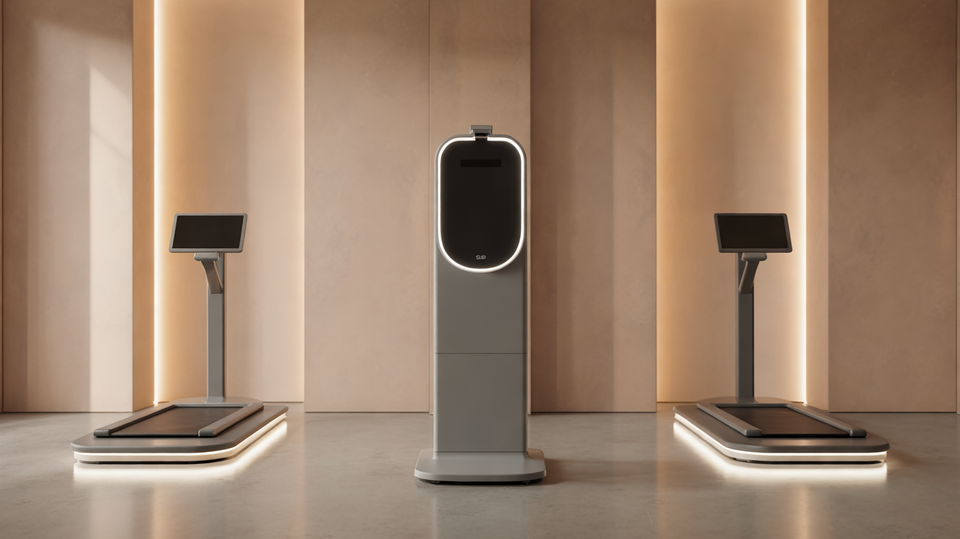
The dedicated turntable-style option in the ranked list is usually the closest thing to a full body 3d scanner workflow built for repeatability. It’s not always the most portable choice, but it tends to reduce operator error because the camera array and rotation path are controlled.
Best for portability and mixed object-plus-body scanning
Portable handheld models are the better fit if you also scan props, mannequins, footwear, or hard surfaces. Several picks above are marketed first as 3D printing scanners, and that matters because their software often prioritizes mesh detail over automatic body smoothing.
If you want to understand how handheld capture overlaps with printing workflows, everything about 3d scanner to 3d print gives useful context on why geometry cleanup can matter as much as raw scan detail.
Best for fitness progress and measurement tracking
A fitness 3d body scanner is less about museum-grade detail and more about consistent repeat scans. If your goal is circumference trends, posture comparison, or before-and-after visuals, a scanner that delivers the same result under the same conditions every week is more useful than one that promises ultra-fine precision but varies with lighting.
That’s why shoppers often search terms like fit 3d body scanner, shape scale 3d body scanner, and shapescale 3d body scanner even when they don’t need industrial-grade equipment. They want body-change tracking, not just a pretty mesh.
What should you check before buying a body 3d scanner?
If you only look at marketing screenshots, most scanners seem interchangeable. They’re not.
These are the five specs and workflow details that matter most in the 7 Best 3D Body Scanners in 2026.
1. Scan time per person
For a whole body 3d scanner, faster capture almost always beats theoretical precision. A scan completed in under 15 seconds usually produces cleaner human geometry than a slower scan that forces the subject to stay frozen.
If the system needs multiple passes, ask yourself whether your subject can keep the same stance. Tiny shifts in elbows or hips create alignment errors that software can’t fully fix.
2. Tracking performance on clothing and skin
Human scanning is messy. Black leggings, glossy jackets, loose sleeves, and reflective sneakers can all break tracking on a full body scanner 3d setup.
The safest workflow is snug, matte clothing in a neutral tone. If the scanner struggles with featureless surfaces, add texture through garments rather than relying on software to guess missing data.
3. Export formats and software compatibility
Before you buy, confirm that the scanner exports OBJ, STL, or PLY. Those are the formats most often needed for 3D printing, avatar creation, mesh editing, and design handoff.
If your end goal is garment fitting or digital doubles, a 3d full body scanner that exports clean meshes with usable scale data will save you hours. A beautiful preview means very little if the output file is hard to edit downstream.
4. Wired vs wireless workflow
Wireless sounds convenient until you lose data stability halfway through a pass. In my experience, handheld wireless scanning feels best for mobility, but wired capture is still the safer choice for long sessions or large mesh files.
That’s especially true if you plan to scan multiple people in one day. A dropped connection during body capture is much more annoying than during object scanning because you can’t recreate the exact same stance easily.
5. Software cleanup time
This is the hidden cost. Some scans look done in preview mode but still require hole filling, decimation, symmetry fixes, and foot-plane cleanup before they’re usable.
If you’re deciding between the 7 Best 3D Body Scanners in 2026, prioritize the one that gets you from raw capture to export in the fewest clicks. Time saved in post-processing adds up fast.
Best body 3d scanner options by budget in 2026
You asked for practical buying guidance, not vague category labels. Here’s how the current market generally breaks down.
Entry-level range: best if you’re learning body scanning
At the lower end, you’ll usually get portable scanning hardware with good object performance and acceptable body results if you control lighting well. This tier is best for hobbyists, makers, cosplay modeling, or occasional 3d body scanner app experimentation before stepping up to dedicated hardware.
These models can work, but they demand more patience: - Better results with tight clothing - More sensitivity to subject movement - More cleanup after the scan - Best for single-user home projects
If you’re also researching general scanner value, this budget scanner discounts guide is a useful reminder that cheaper hardware often shifts the cost into software time.
Mid-range sweet spot: best for serious enthusiasts and small studios
This is where most buyers of the 7 Best 3D Body Scanners in 2026 should focus. You typically get the best balance of portability, speed, and software maturity without jumping to enterprise pricing.
For many users, this bracket is the real value zone: - Good enough for avatar creation - Strong enough for 3D print body models - Practical for small business scanning services - Usually the easiest to transport between locations
Premium range: best for repeatability and business use
If you’re charging for scans or using them in production, premium models make sense because they reduce failed sessions. A body scanner 3d used in a commercial workflow needs consistent alignment, stable color capture, and predictable exports.
That’s where faster processing, better tracking, and stronger software support justify the higher spend. You’re not just buying hardware — you’re buying fewer rescans.
Portable handheld vs multi-camera booth: which full body 3d scanner works better?
This is one of the most important buying decisions, and the answer is surprisingly clear.
Definitive recommendation: If your main goal is scanning people, a controlled multi-camera or guided 360° setup usually beats a handheld scanner for consistency. If your goal is flexibility across bodies and objects, handheld wins.
Choose handheld if you need:
- Portability between events, studios, or client homes
- Mixed use for objects, parts, and people
- Lower setup complexity
- More control around difficult angles
Choose a fixed or guided full-body setup if you need:
- Repeatable scans for the same pose
- Faster throughput for multiple users
- Better symmetry on torso and legs
- Less operator skill
A whole body 3d scanner setup is especially useful for fitness or sizing workflows where consistency matters more than artistic texture detail.
What file formats and software features matter most after the scan?
People obsess over capture hardware and forget the output. That’s backwards.
For most body workflows, you want: - OBJ for textured meshes and avatar work - STL for 3D printing simplified body models - PLY when color data matters - Basic editing tools for hole filling - Auto alignment that can recover from slight motion - Scale preservation so measurements stay usable
If you’re creating body references for fashion or fit visualization, a clean mesh matters more than ultra-high polygon density. For style-related digital fitting context, some readers also branch into apparel silhouette research here and trend styling questions like bodycon dress accessories 2025, where body shape visualization often overlaps with scan-based fitting.
What review patterns separate a good 3d body scanner from a frustrating one?
After reading scanner feedback for years, the complaint patterns are incredibly consistent.
Green flags in reviews
- Buyers mention fast first successful scans
- Multiple users report usable exports without heavy editing
- Reviews specifically mention human body capture, not just objects
- Setup works in ordinary indoor lighting, not only controlled demo spaces
Red flags that usually predict returns
- “Looks great in preview, breaks on export”
- Frequent loss of tracking on dark clothing
- Software crashes during long scan sessions
- Good detail on objects, weak results on shoulders, hands, or faces
- Long calibration process before every session
A lot of these issues sound technical, but the user experience angle matters. The same way Dollaroverflow looks at usability in document devices, body scanning success often comes down to whether normal people can get a reliable result in a normal room.
💡 Did you know? Even high-precision scanners often struggle more with hands, hair, and feet than with the torso because those areas combine fine geometry, occlusion, and movement. If your workflow depends on those details, plan on extra cleanup or a second focused pass.
Is a 3d body scanner app enough, or do you need dedicated hardware?
A 3d body scanner app is fine for casual visualization, basic body reference, or trying out scanning for the first time. It is usually not enough for repeatable measurement, commercial output, or clean printable meshes.
Dedicated hardware wins in three areas: - Better depth data - More reliable alignment - Cleaner full-body geometry
That said, apps are improving fast. If you’re mostly curious about a 3d body scanner near me versus buying your own, test a local service first before spending on hardware. One paid session can tell you whether you actually need ownership or just occasional access.
How to get better results from any 3d scanner body setup
You can improve scan quality more with setup discipline than most people expect.
Use this checklist before every session: 1. Wear matte, fitted clothing with visible texture. 2. Avoid mirrors, glass, and direct sunlight in the scan area. 3. Keep feet shoulder-width apart and hands slightly away from the torso. 4. Lock your pose for the full capture window, even if it’s only 10 to 20 seconds. 5. Run a test scan and inspect the ankles, hands, and waistline before doing the final pass.
Pro tip: If your scanner keeps losing the waist or hip outline, change clothing contrast rather than changing the scanner. A dark top with equally dark pants can flatten edge detection, while a slight tonal difference often improves segmentation immediately.
Are the top picks above good for 3D printing, avatars, or fitness tracking?
Yes, but not all in the same way.
Several of the scanners listed above are strongest when you want printable body meshes or mixed object scanning. Others make more sense if your priority is portability, event work, or a fast 3d scanner full body workflow.
If you’re validating technical workflow decisions, outside resources like web analysis tool comparisons and adjacent gear research such as visit site can sound unrelated, but they highlight the same truth: support software, power stability, and accessory readiness often determine whether hardware performs well in real use.
If you want the shortest answer, here it is:
- Best for body-focused repeatability: the dedicated full-body system in the ranked list
- Best for portable mixed-use scanning: the handheld models with strong tracking and fast frame rates
- Best for creators who also print models: the picks above that prioritize clean mesh export for print workflows
- Best for trend tracking and visual body change: the scanner that gives you the most consistent repeat scan under the same room conditions
The single most important factor when choosing among the 7 Best 3D Body Scanners in 2026
Ignore the marketing race for tiny accuracy numbers if your main subject is a person.
The most important criterion is how reliably the scanner captures a full human body without losing alignment. If a model handles small posture shifts, exports clean OBJ/STL/PLY files, and gives you a usable mesh after one pass, it’s a better buy than a more “precise” option that forces constant rescans.
Frequently Asked Questions
how accurate is a 3d body scanner
A good 3d body scanner can be very accurate for overall body shape, circumference trends, and printable geometry, especially under controlled lighting and stable posture. In real-world use, human movement, clothing texture, and software cleanup affect results more than the advertised precision number.
how much does a 3d body scanner cost
A body scanner 3d can range from app-based low-cost tools to premium dedicated hardware in the professional tier. Most buyers should think in entry-level, mid-range, and premium brackets rather than chasing exact prices, because bundled software and accessories change total cost quickly.
is a 3d body scanner app worth it for beginners
Yes, a 3d body scanner app is worth trying if you want basic visualization or a low-risk first test. It usually isn’t the best option for accurate repeat measurements, clean full-body printable meshes, or business use.
can I use a full body 3d scanner for 3D printing
Yes, a full body 3d scanner can work very well for 3D printing if it exports STL or OBJ files and produces a watertight mesh after cleanup. For the best results, check whether the software handles hole filling and preserves scale during export.
where can I find a 3d body scanner near me
Search for 3d body scanner near me if you want local fitness studios, maker spaces, event vendors, or specialty scanning services. Trying a local scan first is often smarter than buying hardware immediately, because one session will show you the quality level you actually need.