In this guide
How we picked
We selected widely available dog beds you can buy now and compared fill type, cover fabric, size range, machine-washable parts, waterproof liners, warranty, and listed price. We favored products with clear weight or size guidance, non-slip bases, and removable covers readers can verify on the product page.
The best picks, ranked
EHEYCIGA Orthopedic Extra Large Dog Bed, Waterproof Washable XL Pet Bed 44" | Non-Slip Bo…

- Memory foam and egg crate foam
- 3-sided bolsters support neck and head
- Waterproof film under fleece surface
KSIIA Washable Dog Bed Medium Size Dog Crate Bed Plush Pet Mat 35"x23" Gray | Deluxe Plus…

- 3.5-inch fiber fill supports joints
- Ultra soft rose velvet surface
- Anti-slip and anti-scratch bottom
Hoewina Dog & Cat Bed for Indoor Cats, 20in Calming Donut Bed (Light Grey) | Calming Donu…

- Raised edges support head and neck
- 20 x 20 x 8 size
- Waterproof and anti-slip bottom
BFPETHOME Orthopedic Washable Large Dog Bed for Senior Dog Comfy Sleep | Waterproof Big S…

- High density egg crate foam
- U-shaped with 3 side pillows
- Waterproof inner layer
EHEYCIGA Fluffy Dog Crate Bed, Plush Extra Large Dog Pillow, Grey | Xlarge Calming Anti A…

Patas Lague Orthopedic Large Dog Bed Washable Pet Sofa Bed 36''X24'' Black | 2-Sided Bols…

- Egg crate foam relieves pressure
- 2-sided bolsters cradle neck and head
- Removable machine-washable cover
Spotted Play Orthopedic Dog Bed with Sides - Dog Sofa Beds for Medium Dogs, Supportive Fo…

- High-density egg-crate foam
- 4-sided bolster with lowered entrance
- Waterproof liner and washable cover
If you’re comparing bed dog beds in 2026, the real question isn’t “Which one is cutest?” It’s which bed keeps your dog asleep for 6–10 hours without overheating, flattening, or sliding across the floor at 2 a.m. That’s where most dog beds fail.
A good bed changes daily life fast. Senior dogs get up with less stiffness, crate-trained puppies settle sooner, and heavy chewers stop shredding weak seams in a week. Below, I’ll help you make sense of the 7 Best Dog Beds in 2026 by use case, sleep style, and budget range—so you can choose the right fit from the ranked list already on this page, not just the one with the fluffiest photos.
What actually separates the 7 Best Dog Beds in 2026 from forgettable beds?
The best picks on this page solve a specific sleep problem. That’s why an orthopedic sofa-style bed works for an older Labrador, while a plush crate mat works better for a young dog that runs hot and sprawls.
Here’s the fastest way to think about the 7 Best Dog Beds in 2026 already listed above:
- For senior dogs or joint pain: go straight to an orthopedic foam model with real structure and edge support.
- For crates and travel: a thinner washable mat is easier to lift, air out, and replace covers on.
- For anxious curlers: donut-shaped calming beds work best for dogs under roughly 25–30 pounds that like nest-style sleep.
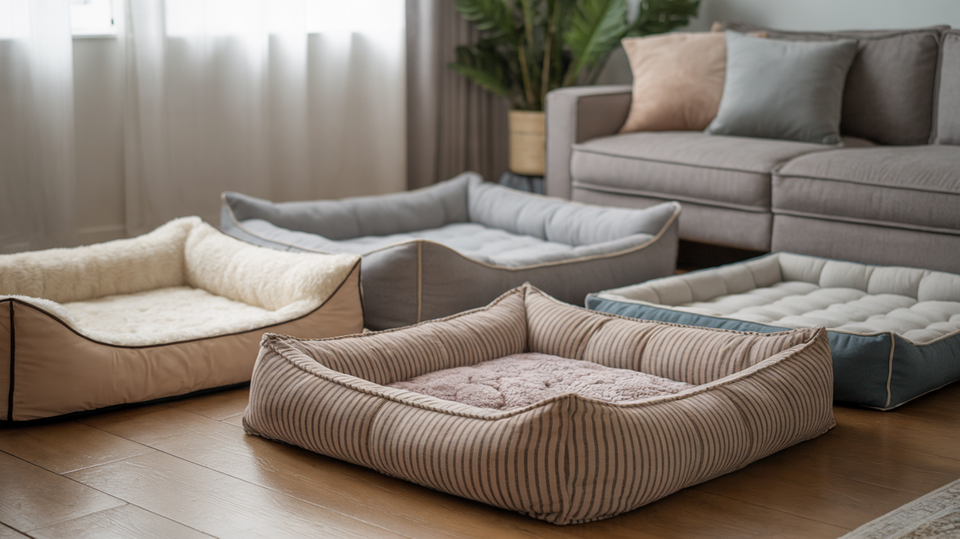
- For dogs that lean or rest their chin: sofa beds with bolsters usually outperform flat pads because they provide three-sided support.
From the products above, the strongest use-case split is obvious. The orthopedic beds are built for pressure relief, while the plush and donut styles are built more for comfort, containment, and easy washing.
Which bed dog beds style is best for your dog’s sleep position?
Sleep position predicts bed satisfaction better than marketing claims.
If your dog sleeps stretched out on their side, flat rectangular beds usually waste less surface area than round designs. That’s why larger breeds often do better on the listed orthopedic beds than on compact cuddle beds.
If your dog sleeps curled into a tight circle, the Hoewina-style calming donut shape makes more sense. These beds create a rim around the body, which helps small dogs feel tucked in without needing a crate wall.
If your dog sleeps half on the bed, half off, bolsters matter. Products like the sofa-style options on this page give dogs a defined edge, and that edge often doubles as a headrest.
Side sleepers usually need more usable surface than labels suggest
A “large” label can be misleading if the bed has thick bolsters that reduce the center sleeping zone by 3–6 inches. For long-bodied dogs, that inner sleep area matters more than the outer dimensions printed on the box.
Dogs that run hot do better with less faux-fur depth
Deep shag looks cozy, but it traps more heat. If your dog pants indoors, sheds heavily, or leaves warm body impressions after naps, a lower-pile surface is often the smarter pick.
Best budget ranges within the 7 Best Dog Beds in 2026
You don’t need exact prices to shop well; you need to know what changes at each tier.
Under the entry-level range: good for crates, backups, and puppies
At the lowest end, you’re mostly paying for: - Basic fill - Simple stitched edges - Easy portability - Faster wash-and-dry cycles
This range works best for crate inserts, temporary setups, and younger dogs under moderate weight. The KSIIA-style washable mat category fits here well: practical, lighter, and easier to clean after accidents.
The mid-range sweet spot: where most dogs get the best value
This is where many of the 7 Best Dog Beds in 2026 become worth buying for daily use. You start seeing: - Better foam density - Waterproof liners or more resistant inner layers - Non-slip bottoms - Bolsters that keep shape longer than 3–4 months
For most households, this tier gives the best mix of comfort and durability without jumping into specialty pricing.
Premium range: best for seniors, giant breeds, and repeat buyers tired of replacing flattened beds
Premium beds justify the jump if your dog is: - Over about 60 pounds - Arthritic or aging - Sleeping 12+ hours a day - Hard on seams and foam
That’s where thicker orthopedic builds—like the extra-large EHEYCIGA and similar support-focused models—tend to earn their keep. A bed that holds shape for 18 months is cheaper than replacing a flat one every season.
What to look for before you buy one of the 7 Best Dog Beds in 2026
Skip vague shopping advice. These are the details that actually matter.
- Foam height and recovery
- For medium to large dogs, look for a bed that springs back within a few seconds after pressure.
- If you can feel the floor through the base with one hand, it won’t support hips well.
- Washability
- A removable cover beats spot-clean-only designs every time.
- If your dog drools, sheds, or tracks in mud, a bed you can clean weekly is far more usable than one you “plan” to deep clean monthly.
- Non-slip base
- This matters more on tile, laminate, and hardwood than shoppers expect.
- Beds that slide during lie-downs make older dogs hesitant to use them.
- Real sleep area
- Measure your dog from nose to tail base, then add 6–12 inches depending on sleep style.
- Bolstered beds lose internal space, so don’t trust only the outer dimensions.
- Cover fabric
- Shorter nap fabrics usually collect less hair and dry faster.
- Plush tops feel warmer, but they also trap more odor after repeated washes.
- Return-friendly construction
- Beds with zip covers and separate inserts are easier to refresh.
- If you need replacement help later, documentation and cleaning instructions matter; even random reference pages like www.google.com.tr remind you how messy product sourcing can get across the web.
What review patterns matter more than star ratings alone?
A 4.5-star average sounds great—until you notice 30% of recent reviews mention flattening after 60 days.
The most useful review signals for dog beds are: - Compression complaints after the first 1–3 months - Zipper failures after washing - Sizing regrets, especially on bolstered beds - Heat retention for long-haired breeds - Skidding on smooth floors
If you notice repeated comments about “great at first, then flat,” treat that as a durability warning. Foam complaints usually predict replacement faster than cover complaints do.
Red flags that show up again and again
- Beds described as “orthopedic” with no mention of foam thickness
- Covers that can be washed but take excessively long to dry
- Round beds marketed for dogs that actually sleep stretched out
- Very soft fill with no support layer for dogs over 50 pounds
That’s also why search terms like bully beds orthopedic dog bed and barker beds orthopedic dog bed stay popular: buyers are actively looking for support-first beds, not just soft ones.
Are cave, bunk, and attached bed styles actually useful?
Some niche bed searches sound odd until you understand the use case.
dog bed cave beds: best for burrowers, not heat-sensitive dogs
dog bed cave beds work for dogs that like to hide under blankets or wedge themselves into corners. They’re usually a poor fit for dogs that overheat easily, because enclosed fabric traps body warmth much faster than open-top beds.
dog bed bunk beds and bunk bed dog beds: clever in multi-pet homes, limited for big seniors
Searches for dog bed bunk beds and bunk bed dog beds have climbed because small-dog owners want vertical sleeping setups. They’re fun and space-efficient, but older dogs and heavier breeds usually do better with low-entry beds that don’t require jumping or climbing.
dog beds for next to bed: practical for velcro dogs and older pets
If your dog wants to sleep near you, dog beds for next to bed often work better than sharing your mattress. They reduce nighttime disturbance and make it easier for dogs with mobility issues to get in and out.
Related searches like dog beds attached to bed, dog beds attached to your bed, and dog beds that attach to your bed usually come from owners of toy breeds, puppies, or dogs recovering from anxiety. These can be useful, but only if the attachment system is stable and the bed’s edge doesn’t sag.
You’ll also see furniture-style queries like bed with dog beds underneath, bed frame with dog beds underneath, and bed frames with dog beds underneath. Those make sense in apartments, but airflow matters; enclosed under-bed spaces can collect dust and warmth faster than open corners.
For adjacent setup ideas, affordable outdoor dog kennels can help if your dog transitions between indoor rest zones and an outdoor run.
How the listed beds match real-life use cases
The products above make more sense if you match them to the problem they solve.
- Extra-large orthopedic beds: best for senior large breeds, dogs with elbow calluses, and side sleepers who stay in one spot for hours.
- Washable crate mats: best for crates, travel, foster setups, and dogs prone to accidents.
- Calming donut beds: best for toy breeds, curled sleepers, and dogs that like raised edges.
- Sofa-style bolstered beds: best for dogs that like leaning, chin-resting, or nestling against a side wall.
If your dog tracks in dirt after every walk, read these best dog paw cleaning mat tips before blaming the bed cover for constant stains.
And if sleep issues overlap with training—restlessness, crate refusal, bedtime barking—behavior tracking can help. A simple journal system like the one discussed at Twynedocs makes patterns easier to spot.
What materials and add-ons are worth paying for?
A removable, washable cover is usually worth the upgrade. So is a moisture-resistant inner layer if you’re dealing with puppies, seniors, or dogs that come in damp from hikes.
Less essential extras: - Decorative piping - Overstuffed rims that reduce sleep area - Ultra-deep plush on already warm sleepers
More useful extras: - Machine-washable zip cover - Water-resistant liner - Nonskid base - Replaceable cover or compatible dog bed covers for plastic beds
That last search matters more than it seems. Owners using molded crates, utility kennels, or raised plastic shells often want dog bed covers for plastic beds because they’re easier to swap and wash than replacing an entire insert.
7 Best Dog Beds in 2026 for allergy-prone homes, small spaces, and travel
If your dog sheds heavily or your bedroom triggers sneezing, fabric choice affects your room more than most buyers expect. Lower-pile covers usually hold less visible hair than shaggy tops, and frequent washing helps cut dander buildup.
For bedroom setups, pairing a washable dog bed with cleaner air can make a noticeable difference. This levoit bedroom purifier for allergies overview is useful if your dog sleeps close to your bed.
Apartment owners often search odd retail phrases like bed bath & beyond dog beds and dog beds bed bath and beyond, usually because they want easy-return bedding basics. The better strategy is to shop by washable cover, base grip, and actual sleep dimensions—not by store name nostalgia.
For road trips and longer walks, hydration matters as much as bedding comfort. If you travel often, learn about leak proof dog water bottle options that won’t soak the bed on the drive home.
💡 Did you know: Most healthy adult dogs sleep 12 to 14 hours per day, while puppies and seniors often sleep 18 hours or more. That’s why a bed isn’t a minor accessory—it’s one of the most used items in your house.
So which type should you actually choose?
If you want the shortest answer: buy for your dog’s joints and sleep position first, then your décor second.
For most readers, the safest pick from the 7 Best Dog Beds in 2026 is an orthopedic or bolstered orthopedic design with a washable cover and nonslip base. If your dog is small, curls tightly, and craves containment, a calming donut shape can be the better match—but only if heat retention hasn’t been an issue before.
go to page is the kind of unrelated phrase you sometimes see embedded in messy web content, which is exactly why clear product specs matter more than scattered online mentions.
Frequently Asked Questions
can dog beds get bed bugs
Yes, dog beds can get bed bugs, especially if the bugs are already present in your home. Bed bugs don’t prefer pets over humans, but they can hide in seams, zippers, and thick padding between feedings.
what is the best dog bed for older dogs with arthritis
The best dog bed for older dogs with arthritis is usually a thick orthopedic foam bed with a low step-in height and nonslip base. Bolsters help many seniors rest their head, but the core support layer matters more than extra fluff.
are orthopedic dog beds worth it for medium dogs
Yes, orthopedic dog beds are often worth it for medium dogs, especially if your dog is over about 5 years old, sleeps on hard floors, or shows stiffness after naps. You’re paying for pressure relief and shape retention, not just softness.
how do i choose the right size dog bed
Measure your dog from nose to tail base and add 6 to 12 inches depending on whether they curl up or stretch out. For bolstered beds, check the inner sleeping area, because the usable space is often several inches smaller than the listed outer dimensions.
what are dog beds for next to bed and are they worth it
Dog beds for next to bed are low-profile beds designed to sit right beside your mattress so your dog can sleep close without taking over your bed. They’re worth it for clingy small dogs, older pets that can’t jump safely, and light sleepers who want fewer nighttime wake-ups.