In this guide
How we picked
We selected foam rollers currently sold by major retailers and checked measurable details readers can verify: dimensions, density or firmness claims, surface pattern, material type, weight limit, and price. We also looked for clear care instructions, warranty information, and whether the roller is smooth or textured for different pressure preferences.
The best picks, ranked
TriggerPoint Grid 1.0 Foam Roller - 13" Multi-Density Massage Roller for Deep Tissue & Mu…

- Multi-density 3D surface
- Firmer hollow-core design
- Durable EVA foam keeps shape
Amazon Basics High-Density Foam Roller for Exercise and Recovery, 18 Inches, Black

- Good for balance exercises
- High-density polypropylene
- Lightweight and easy to carry
The Original Body Roller - High Density Foam Roller Massager for Deep Tissue Massage of t…

321 STRONG Patented 3-Zone Massage Roller, Medium Density for Exercise | Palm, Finger, an…

Foam Roller Set - High Density Back Roller, Muscle Roller Stick | Foot Fasciitis Ball, St…

- Includes 7-piece massage set
- Portable nylon mesh bag
- High-density foam supports 300 lbs
MZDXJ Muscle Roller Massage Roller Stick- Deep Tissue Fascia Blaster for Myofascial Pain…

- Targets deep trigger points
- Focuses on fascia care
- Promotes blood circulation
Krightlink 5 in 1 Foam Roller Set Trigger Point Exercise Foam Roller | Deep Tissue Muscle…

A foam roller for fascia release can feel brutally effective—or completely pointless—depending on the roller’s density, surface pattern, and how you use it. In practice, the difference shows up fast: a smooth high-density roller might calm tight calves in 90 seconds, while an aggressively textured model can leave your TFL and upper back feeling overworked if you go too hard.
That’s why 7 Best Foam Rollers for Fascia Release in 2026 isn’t really about a simple ranked list. It’s about matching the right roller to your tissue tolerance, training volume, and the specific areas you’re trying to improve, whether that’s plantar fascia tension, post-leg-day quads, or a stiff thoracic spine after eight hours at a desk.
Because the ranked products already appear above, this guide focuses on what actually helps you choose: which roller shape works for which body part, what firmness level gives the best myofascial release, what review patterns signal buyer regret, and how to use a foam roller for fascia release without irritating already-sensitive tissue.
Quick reality check: Most people don’t need the most aggressive option. For fascia work, the best results usually come from consistent 30- to 90-second passes, moderate pressure, and a roller that matches your pain tolerance—not the hardest model on the page.
Which of the 7 Best Foam Rollers for Fascia Release in 2026 is right for your body?
If you’re staring at the list above and all the rollers look similar, here’s the simplest way to split them up. The best foam roller for fascia release is usually determined by surface texture + density + length, not by marketing claims.
Choose a smooth, high-density roller if you want broad pressure
The Amazon Basics High-Density Foam Roller and The Original Body Roller fit this lane best. These work well if you want even compression across larger muscle groups like quads, glutes, hamstrings, and lats, especially if you’re newer to self-myofascial release.
Why this style works: - Broader contact area spreads pressure more evenly - Usually easier for beginners to tolerate for 60-second sets - Better for large regions where pinpoint pressure feels too intense - Often the best starting point if you’re asking what is the best foam roller for tight legs and back?
If you’ve ever borrowed a roller at a gym and thought, “That’s intense, but manageable,” it was probably a smooth, medium-to-high-density model.
Choose a multi-density textured roller if you want deeper trigger point work
The TriggerPoint Grid 1.0 and 321 STRONG Patented 3-Zone Massage Roller are more targeted. Their patterned surfaces concentrate pressure into smaller zones, which can feel more effective on stubborn knots around the calves, outer quads, and upper back.
This style usually suits: - Runners with recurring calf or IT-band-adjacent tightness - Lifters who want more precise pressure on glutes and thoracic spine - Users who already know how to use a foam roller for deep tissue release
That said, textured doesn’t automatically mean better. If you wince and hold your breath, you’re probably exceeding the pressure your nervous system will tolerate, which often makes tissue guarding worse.
Choose a roller set if you need more than one tool
The Foam Roller Set - High Density Back Roller, Muscle Roller Stick | Foot Fasciitis Ball and Krightlink 5 in 1 Foam Roller Set solve a different problem: access. A full-size roller helps with thighs and back, while a stick or ball reaches smaller structures like arches, shins, and pecs more precisely.
These kits make the most sense if: - You want one recovery setup for home use - You’re dealing with both plantar fascia and larger lower-body muscles - You value versatility more than one “perfect” roller
For travel or gym bags, though, a full set can be overkill.
Foam roller for fascia release: which size and firmness actually work best?
This is where buyers get it wrong most often. The wrong length or density won’t just feel uncomfortable—it can make the roller much less useful.
Short rollers: better for calves, glutes, and travel
A 13-inch class roller, like the Grid-style option above, is easier to pack and easier to position under one leg or one side of the body. It’s ideal when you want controlled pressure on smaller zones.
Best for: - Calves - Glutes - Upper back - Travel recovery - Small apartments or gym bags
The tradeoff is stability. A shorter roller can feel wobbly under both legs or the full spine.
Mid-length rollers: the sweet spot for most people
Rollers in the 18-inch range balance stability and storage. If you want one tool for general recovery, this is the most practical format.
Why mid-length often wins: - Long enough for both legs - Short enough to store easily - Works for quads, hamstrings, lats, and back - Usually the safest pick if you’re comparing the 7 Best Foam Rollers for Fascia Release in 2026 without a very specific niche need
For most homes, this is the “buy once, use for everything” category.
Firmness matters more than most product listings admit
Here’s the blunt truth: extra-firm rollers are not automatically better for fascia release. If you’re new, medium density typically gives better adherence because you’ll actually use it more than twice.
Use this rule of thumb: - Beginner: medium density or smooth high-density - Intermediate: high-density smooth or moderate texture - Advanced: multi-density texture for targeted work - Very sensitive tissue or older adults: avoid the harshest surface patterns first
A lot of negative reviews come from people buying the most aggressive roller available, then abandoning it after a week because it’s too painful to use consistently.
Best foam roller for fascia release by budget: what changes as you spend more?
Price doesn’t always buy better tissue work. In this category, it usually buys surface design, durability, included accessories, and slightly better shape retention over months of use.
Budget range: simple rollers that do the core job well
The lower price tier is dominated by smooth high-density rollers. These are often the best value for beginners because they cover the basics of muscle recovery, mobility work, and general self-massage without overwhelming pressure.
What you usually get: - Smooth surface - Standard EVA or molded foam feel - Reliable support for large muscle groups - Fewer extras, but often better simplicity
If your goal is basic fascia release after workouts, budget options are often enough.
Mid-range: the sweet spot for most buyers
This is where textured rollers and better-engineered surfaces start to stand out. You’ll usually notice more intentional pressure zones and slightly better durability if you use the roller 4 to 6 times per week.
This bracket makes sense if: - You already foam roll consistently - You want better grip and surface variation - You’re trying to target multiple problem areas - You care about longevity more than bundled extras
For most people comparing the 7 Best Foam Rollers for Fascia Release in 2026, this is the best value zone.
Premium range: worth it only if you’ll use every feature
Higher-priced kits or specialized recovery tools can be useful, but only if you’ll actually use the balls, sticks, and targeted pieces. Otherwise, you’re paying for accessories that may sit in a drawer next to resistance bands you forgot you own.
A premium pick is worth it if: - You want a full home recovery setup - You manage several recurring hotspots - You need both broad rolling and pinpoint pressure - You share the tools with a partner or family member
What to look for in the 7 Best Foam Rollers for Fascia Release in 2026
If you’re trying to narrow the list above, these are the criteria that matter most in real use.
1. Surface pattern should match your pain tolerance
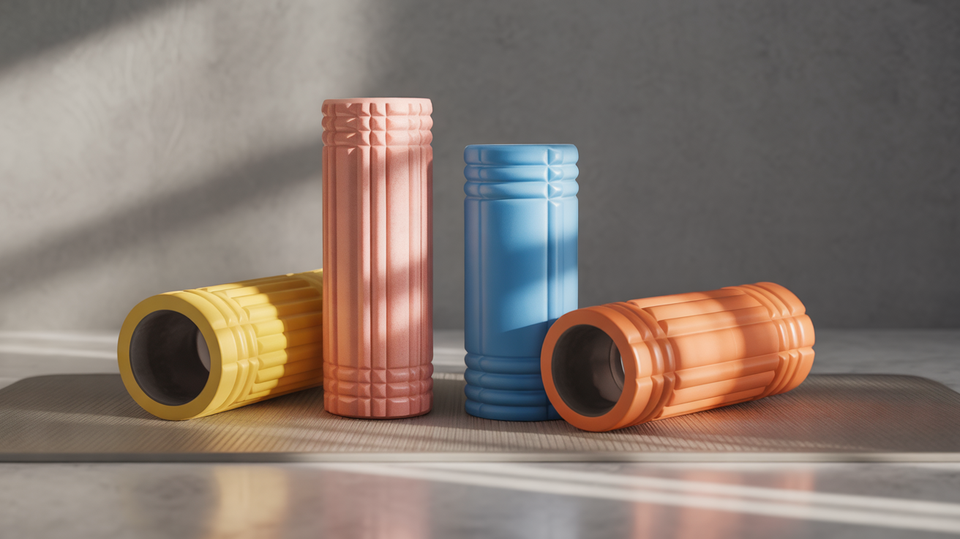
A smooth roller is usually better for broad compression and beginner comfort. A ridged or multi-zone roller is better for focused trigger point therapy and deeper sensation.
If you’ve never done myofascial release before, start smoother than you think you need.
2. Density should let you breathe normally during a 30-second pass
That sounds simple, but it’s a strong filter. If you can’t stay relaxed while rolling your quad or calf for 30 to 45 seconds, the roller is probably too intense for productive recovery.
A useful foam roller creates pressure. It shouldn’t create panic.
3. Length should fit your main use case
Use this cheat sheet: - Short roller: travel, calves, glutes, upper back - Mid-length roller: best all-around choice - Full-size or kit approach: broader home recovery setup
If you’re mostly working on lower legs and hips, shorter can be better than bulkier.
4. Shape retention matters after the first month
Cheap foam that flattens quickly changes the pressure profile and makes the roller less predictable. If review language repeatedly mentions “lost firmness” or “dented after a few weeks,” that’s a real red flag.
5. Kits are only valuable if you’ll use the smaller tools
A massage ball can be excellent for the foot arch, pec minor, or glute med. But if you mainly want to roll quads and hamstrings, a simple standalone roller often gives better value.
For broader mobility work, some people cross-shop rollers with sliding tools used in lateral training; if that’s you, this resource on www.google.co.kr is adjacent, but foam rollers remain the better pick for direct tissue pressure.
What review patterns separate a good fascia roller from one buyers regret?
You don’t need to read 500 reviews. You need to spot the same three complaints repeating.
Red flag #1: “Too hard to use consistently”
This shows up most with highly textured rollers bought by beginners. If multiple users say they can only tolerate 10 to 15 seconds on quads or calves, that roller is probably too aggressive for general-use buyers.
Red flag #2: “Slides on the floor” or “feels unstable”
A roller that slips on hardwood or tile disrupts pressure and makes you tense up. That matters most for hamstring and thoracic spine work, where stability changes how deeply you can relax into the tool.
Red flag #3: “Set accessories feel like filler”
In multi-piece kits, the full-size roller may be solid while the stick, bands, or small attachments feel cheap. If you’re comparing set-based options, buyer comments often tell you whether the bundle is functional or just padded for perceived value.
💡 Did you know: Fascia responds better to slow, sustained pressure than frantic back-and-forth rolling. In practical terms, a 1-inch-per-second pace usually works better than racing over the same muscle for two minutes.
How to use a foam roller for fascia release without making tight spots angrier
The biggest mistake isn’t buying the wrong roller. It’s using a decent roller like a punishment device.
Start with 30 to 60 seconds per area
For quads, calves, glutes, lats, and upper back, spend 30 to 60 seconds on one zone before moving on. That’s enough time to assess whether the tissue settles or whether you’re just bracing against the pressure.
Use a 4-to-6-out-of-10 pressure level
If 10⁄10 is “I’m holding my breath and seeing my ancestors,” stay around 4 to 6 out of 10. That’s where most people get useful tissue input without triggering more guarding.
Avoid rolling directly over joints or bony points
Stick to soft tissue. For example, roll the quadriceps, but not directly over the kneecap; the calves, but not the Achilles tendon itself.
Pair the roller with one movement right after
This is where good results stick. After rolling calves, do ankle mobility; after glutes, do bodyweight squats; after thoracic rolling, try overhead reaches.
That combo usually beats passive rolling alone.
If you enjoy comparing recovery gear across categories, internet rabbit holes can lead anywhere—from maps.google.be to oddly specific buying guides—but for fascia work, the real win is matching intensity to the body part, not chasing the fanciest tool.
Which pick above is best for beginners, athletes, and plantar fascia pain?
You don’t need a universal “best.” You need the right best for your use case.
Best for beginners
A smooth high-density roller is usually the smartest starting point. The Amazon Basics High-Density Foam Roller and The Original Body Roller style are easier to tolerate, especially for quads, hamstrings, and glutes.
Best for athletes who want deeper pressure
A textured multi-density roller like the TriggerPoint Grid 1.0 or 321 STRONG 3-Zone style is usually better if you already know your tolerance and want more targeted pressure.
Best for plantar fascia and small hotspots
A set with a ball or stick often wins here. The Foam Roller Set and Krightlink 5 in 1 style setups can address the foot arch more directly than a standard cylindrical roller alone.
Best for travel
Shorter rollers are easier to pack, stash in a car trunk, or keep near your desk. If you’ll use it more because it’s convenient, that matters more than a slightly better texture profile.
For readers who also enjoy comparing practical buying guides in unrelated categories, you might appreciate best sim card for europe, though thankfully foam rollers require fewer activation steps.
7 Best Foam Rollers for Fascia Release in 2026: the one decision that matters most
After testing different styles over time, the biggest predictor of satisfaction isn’t whether the roller looks advanced. It’s whether you can use it 3 to 5 times per week without dreading it.
If you’re torn, choose the roller you’ll actually keep on the floor and use after training. For most people, that means a mid-length, high-density roller with moderate—not extreme—texture.
That single criterion beats hype almost every time.
A quick note before the FAQ: the web is full of unrelated recommendation pages—from a guide to educational board games for kids 8-12 and everything about personalized christmas ornaments for kids to best gifts for dads 2026 in detail and Dog Names. Foam rollers are refreshingly simpler: get the pressure profile right, and you’re 80% of the way there.
Frequently Asked Questions
What is the best foam roller for fascia release if I’m a beginner?
The best foam roller for fascia release for most beginners is a smooth or lightly textured high-density roller in a mid-length size. It gives enough pressure for quads, calves, and glutes without the sharp discomfort that makes many people quit after a few sessions.
How often should I use a foam roller for fascia release?
Most people do well with 3 to 5 sessions per week, spending 30 to 90 seconds per muscle group. Daily use can work if pressure stays moderate and you’re not rolling directly over irritated tissue.
Is a textured foam roller better than a smooth one?
A textured roller is usually better for targeted trigger point work, while a smooth roller is better for broad pressure and beginner comfort. If you’re new to self-myofascial release, smooth is often the more effective choice because you’ll tolerate it longer and use it more consistently.
Is a foam roller set worth buying or should I get one roller?
A set is worth it if you know you’ll use the ball or stick for feet, glutes, or smaller hotspots. If your goal is mainly quads, hamstrings, and back recovery, one good mid-length roller usually offers better value than a bundle.
How do I use a foam roller for plantar fascia and foot tension?
For foot tension, a small ball from a roller set usually works better than the main roller itself. Apply gentle pressure under the arch for 30 to 60 seconds per foot, then stand up and walk a few steps to see whether the tissue feels looser rather than more irritated.