In this guide
How we picked
We included buyable name tag badges with clear product details and checked visible specs such as material, dimensions, backing type, refill options, minimum pack size, and listed price. We also favored products with customer reviews, common workplace use cases, and straightforward replacement or reuse options.
The best picks, ranked
Custom Name Badge with Logo - Personalized Acrylic Name Tag
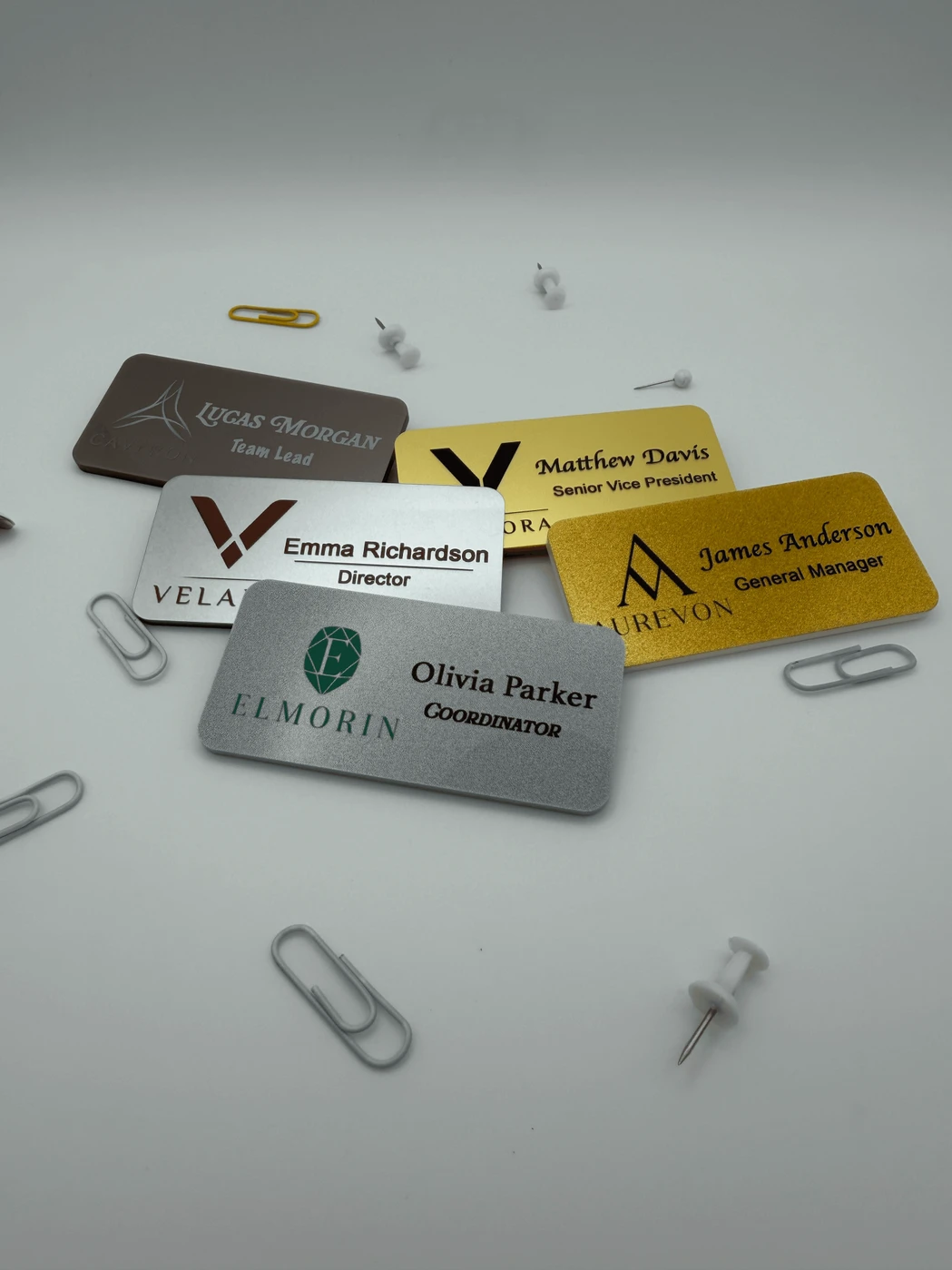
- Premium acrylic name badge tag with your logo, name, and title — personalized to your exact spec
- Available with magnetic, pin, or clip fastening — order just one or a full team set
- UV-resistant printing keeps your branding vivid through years of daily professional use
- Ships anywhere in the US with fast dispatch and bulk pricing for large orders
Personalized Acrylic Name Badges with Your Logo
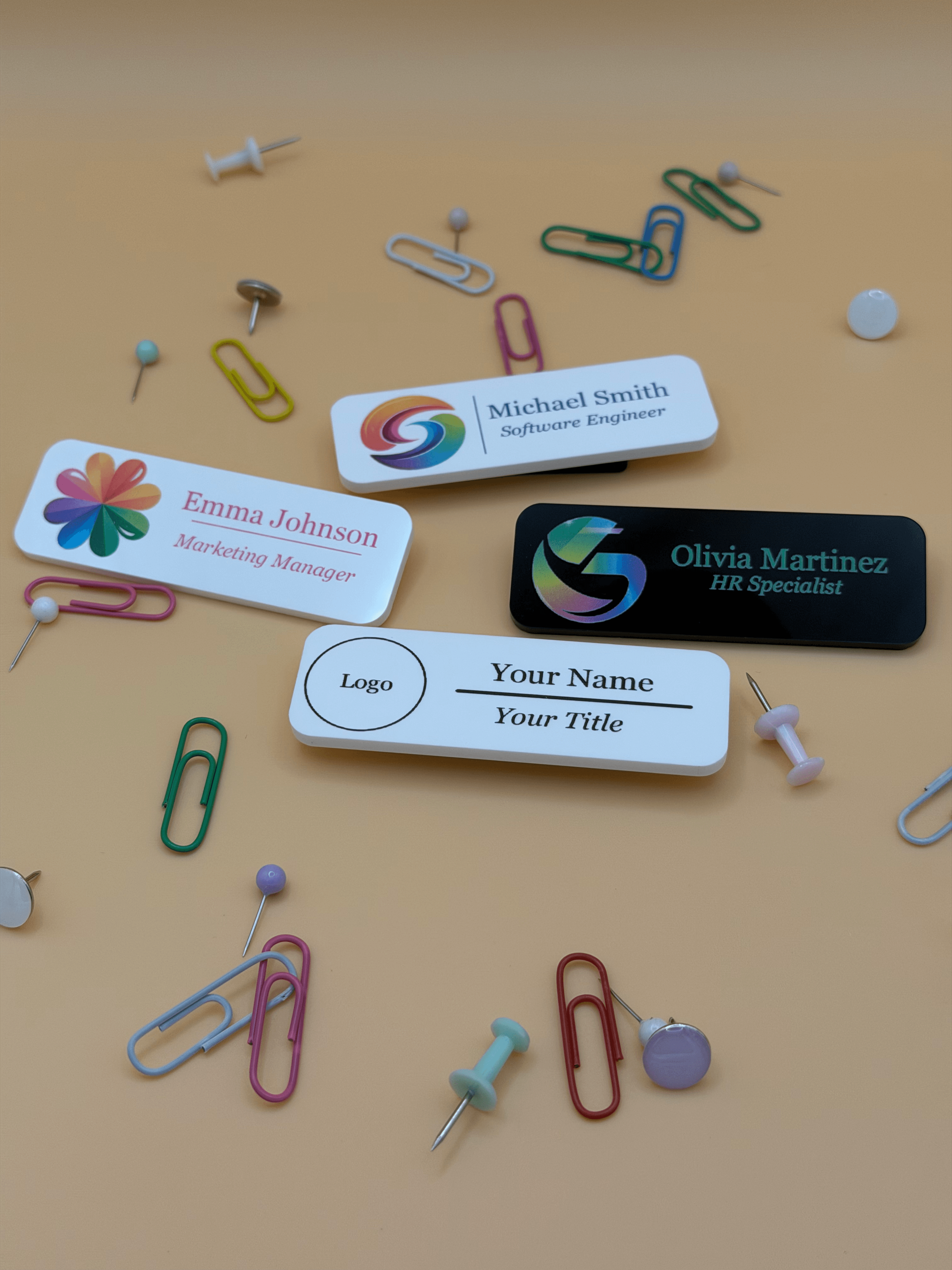
- Design your name badge tag online in minutes — upload your logo, pick your layout, preview instantly
- Professional acrylic quality with crisp full-color printing on every badge
- No design experience needed — intuitive builder with business-ready templates
- Order any quantity with no minimum — perfect for teams of any size
Custom 3D Printed Name Badge – Personalized Name Tag
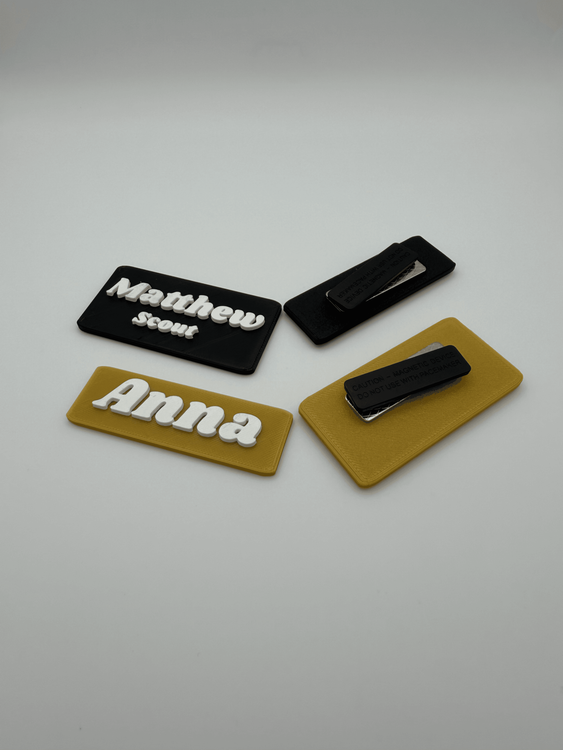
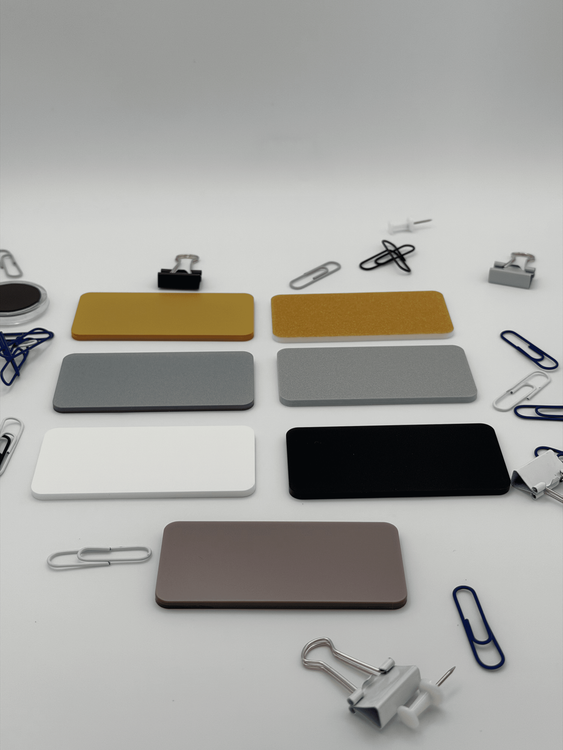
Blank Acrylic Name Badges with Pin or Magnet Back, Employee ID Name Tags
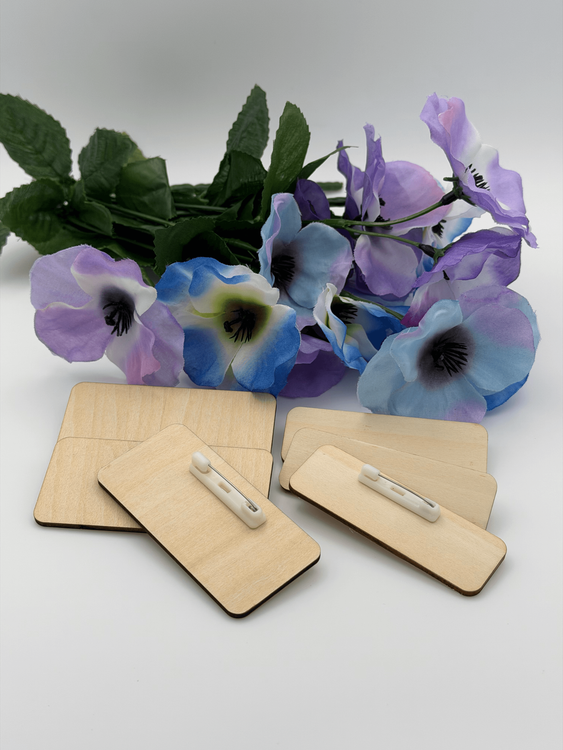
Wooden Name Badges Blank Pin Back Tags
Custom Name Badge with Logo – Personalized Acrylic Name Tag
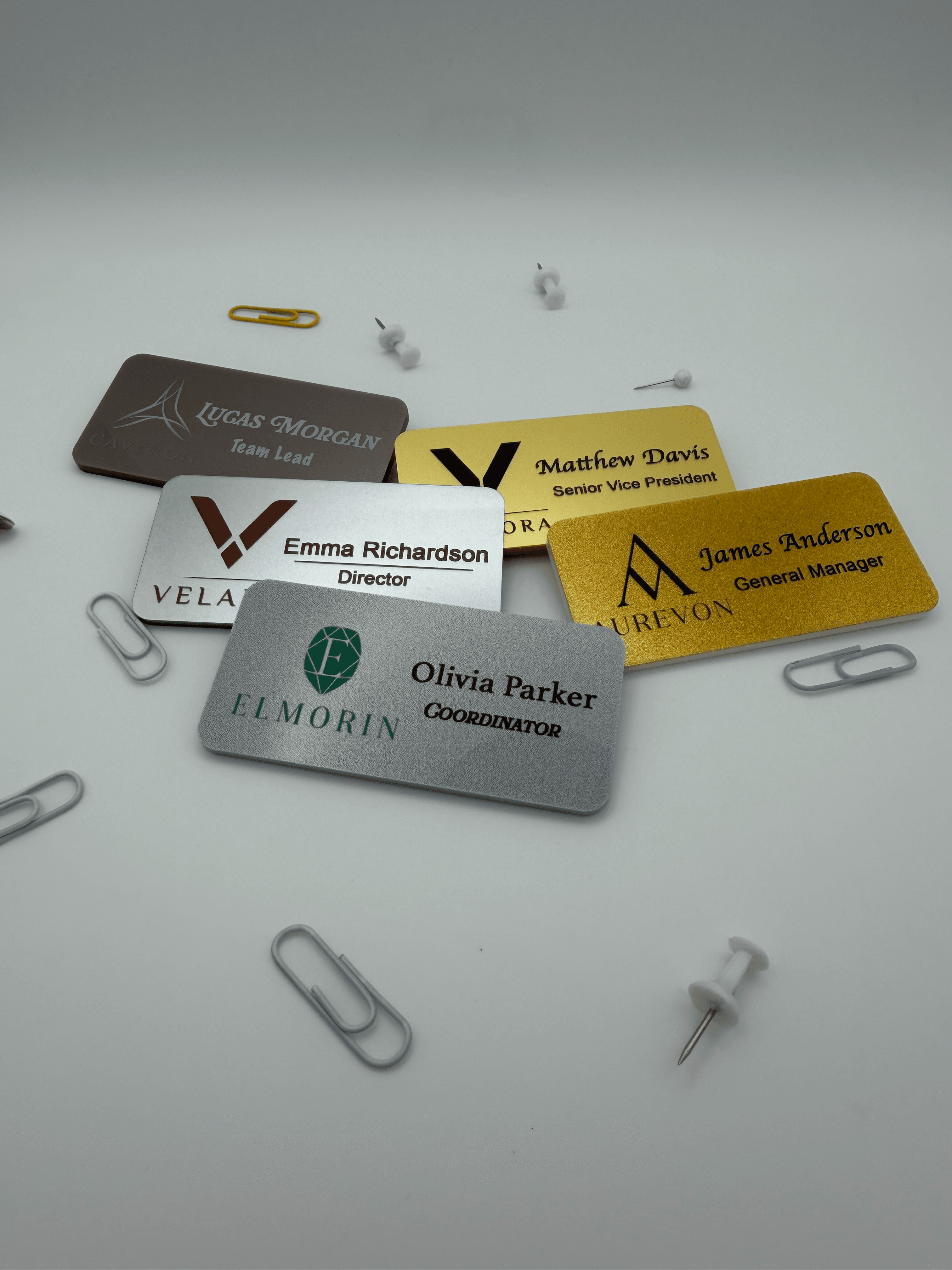
Personalized Acrylic Name Badge with Logo
Name tag badges do a lot more work than most people realize. At trade shows, front-desk counters, classrooms, hospitals, and pop-up events, a badge has about 2 seconds to answer three questions: who you are, what you do, and whether someone should approach you.
That tiny rectangle also causes a surprising number of headaches. I’ve seen acrylic badges arrive with logos cropped wrong, magnetic backs slip on thin shirts, and pin-back tags leave visible holes in uniforms after a week of use. The difference between a badge that looks sharp for six months and one that cracks in two weeks usually comes down to a few very specific details.
Below, you’ll get a practical guide to the 7 Best Name Tag Badges in 2026, focused on how to choose the right option for your setting, what materials hold up best, which attachment style works in real life, and the review patterns that usually predict regret.
Editor’s note: The ranked product list already appears above on this page, so this guide focuses on choosing the right badge for your use case, not repeating the ranking.
Which of the 7 Best Name Tag Badges in 2026 actually fits your job or event?
The best pick depends less on looks and more on where the badge will be worn for 6 to 10 hours at a time. A receptionist, expo exhibitor, teacher, volunteer, and nurse can all need completely different badge specs even if the badge size looks similar online.
Here’s the fastest way to match the options above to your use case:
- Front desk or office staff: Acrylic logo badges with a magnet back usually look the cleanest and avoid shirt damage.
- Retail and hospitality teams: Lightweight plastic name tag badges tend to be more comfortable over long shifts and are easy to reorder in batches.
- Events and conferences: If you need quick swap-outs, name tag badges with lanyards are usually faster than pinned or magnetic styles.
- Temporary staff or volunteers: Blank acrylic badges with replaceable inserts are often more practical than engraved permanent tags.
- Uniform-heavy workplaces: Name tag badges with pins stay put more reliably on thicker fabrics like aprons, fleece, and structured jackets.
- Creative or boutique settings: Wooden blank pin-back tags can feel more premium, but they usually show wear faster than acrylic in high-contact environments.
If you’re choosing from the list above, the Custom Name Badge with Logo - Personalized Acrylic Name Tag and similar acrylic options are often the safest all-around pick because they balance readability, logo presentation, and day-to-day durability.
What makes name tag badges easy to read from 4 to 6 feet away?
If a name badge can’t be read during a normal greeting distance, it fails its job. Most readability complaints come from font size, contrast, and overcrowded layouts, not from the badge material itself.
In my experience, badges work best when they follow these practical rules:
- Keep the name as the largest element
- The wearer’s first name should usually be readable from 4 to 6 feet.
- Small script fonts look elegant on a mockup and frustrating in real life.
- Use high contrast
- Dark text on a light background consistently performs better in indoor lighting.
- Frosted acrylic can look premium, but low-contrast logo colors often disappear under fluorescent light.
- Limit the text
- Name, role, and logo are usually enough.
- Adding phone numbers, long titles, QR codes, and taglines to a small badge often reduces legibility by 30% to 40% in practice.
- Choose a shape that suits the layout
- Wider rectangular badges typically fit logos and job titles better than tall, narrow ones.
- Rounded corners help comfort, but they don’t fix a crowded design.
- Check your proof before ordering
- Most production errors start with low-resolution uploads, tight margins, or transparent-background files that weren’t cleaned correctly.
If you’re uploading a company logo, use a high-resolution PNG, SVG, or vector file whenever possible. Low-quality JPG logos are one of the top reasons custom badges look blurry.
7 Best Name Tag Badges in 2026 by material: acrylic, wood, plastic, or ID-style?
Material changes how a badge looks, feels, and survives daily wear. Two badges can have the same dimensions and attachment, but one will still age far better.
Acrylic badges: best overall for most workplaces
Acrylic remains the best all-around material for name tag and badges because it hits the sweet spot between clean appearance and durability. It resists light moisture, holds printed logos sharply, and usually keeps a polished look longer than softer plastics.
The personalized acrylic options listed above are especially good for: - Offices - Clinics - Salons - Real estate teams - Retail counters
The trade-off? Acrylic can crack if dropped on hard tile repeatedly, especially at thinner cuts.
Plastic badges: best for large teams and fast reorders
Plastic name tag badges are often the easiest option for bulk staff orders. They’re lighter than many acrylic styles, typically cheaper to replace, and practical when you need dozens or hundreds for rotating teams.
They’re a smart fit for: - Schools - Warehouses - Volunteer groups - Seasonal staffing
That said, lower-end plastic can scratch faster. After a few months, gloss surfaces may show visible scuffing around the edges.
Wooden badges: best for boutique aesthetics, not heavy abuse
Wooden name badges stand out in coffee shops, craft stores, florists, and artisan markets. They look warmer and less corporate than acrylic.
But here’s the reality: wood is more likely to show edge wear, absorb moisture, or fade with repeated friction. If staff members wipe badges daily with sanitizer, acrylic usually lasts longer.
Employee ID-style badges: best when security matters
Employee ID name tags make sense when you need a photo, department, or access-related information on the badge. They aren’t always the most stylish option, but they can be the most functional in larger facilities.
If your workplace also tracks visitor access or card retention, operational policies around badges often overlap with broader security rules like cctv footage retention time. Different systems, same goal: accountability.
Magnet, pin, or lanyard: which attachment type causes fewer complaints?
Attachment style matters more than many buyers expect. Most negative feedback I’ve seen about custom badges is really about the backing, not the front design.
Magnet backs: best for polished uniforms and office wear
Magnet backs are usually the top choice for office teams because they: - Don’t puncture fabric - Look cleaner on blouses, polos, and dress shirts - Make removal faster at the end of a shift
They’re ideal for acrylic logo badges, but they’re not perfect. On very thick jackets or stiff aprons, magnets can slide more than buyers expect.
Pin backs: best for thick fabric and active movement
Name tag badges with pins work better when staff are constantly bending, lifting, or moving quickly. They’re more secure on heavy materials and less likely to shift during busy service work.
The downside is obvious: pins can leave holes. On delicate knits or premium uniform shirts, that becomes a real issue after repeated wear.
Lanyards: best for temporary access and events
Name tag badges with lanyards are ideal for conferences, visitor check-ins, schools, and volunteer teams because they’re easy to distribute and collect. They also work well when the badge needs to be visible over jackets or layered clothing.
The drawback is movement. A hanging badge can flip backward, hit tables, or swing while walking, which makes it less polished for customer-facing roles.
If you’re unsure, the simplest rule is this: magnets for polished daily wear, pins for secure placement, lanyards for temporary or high-volume use.
What file format should you use for custom name tag badges?
Badges often look wrong because the artwork file was wrong from the start. That’s especially true for custom logo orders.
Use these file rules before you place an order:
- Best: SVG, AI, EPS, or high-resolution PNG
- Acceptable: Large, clean JPG with strong contrast
- Avoid: Screenshots, compressed web logos, blurry social media images
A logo that looks “fine” on a phone screen can print soft or jagged on a badge that’s only a few inches wide. If your design includes tiny icons or thin lettering, ask for a proof and zoom in before approving it.
For readers who also personalize school labels or small-format identification items, Workers has a useful adjacent guide on naming products that face similar readability and durability issues.
What review patterns usually separate a good badge from a bad one?
The most reliable review clues are surprisingly repetitive. Buyers tend to mention the same failures again and again.
Watch for these patterns:
- “Looks smaller than expected”
- This usually means the product photos were scaled misleadingly.
- Check exact dimensions in inches or millimeters before ordering.
- “Logo came out blurry”
- Often caused by low-resolution artwork, not necessarily bad production.
- If multiple reviews mention blur, though, the print process may be inconsistent.
- “Magnet isn’t strong enough”
- This matters most for thick polos, jackets, aprons, and layered uniforms.
- Thin blouses usually perform better with magnets.
- “Scratches too easily”
- Common with cheaper glossy coatings or softer plastics.
- Acrylic generally performs better than basic printed plastic in daily office use.
- “Pin broke” or “backing detached”
- Repeated in lower-quality bulk batches.
- If you’re ordering for a team, test one sample first before placing a full run.
A useful shorthand: if reviews repeatedly mention printing clarity, edge finish, and backing strength, those comments are more valuable than generic “cute” or “nice quality” praise.
Are premium name tag badges worth it, or is budget good enough?
For most buyers, the sweet spot is mid-range acrylic or plastic custom badges, not the cheapest option and not the premium decorative one.
Budget badges usually make sense when: - You need high volume - Staff turnover is frequent - The badges are temporary - You’re using lanyards for short-term events
Premium badges are worth paying for when: - Staff wear them daily for 6+ months - The badge is part of your brand presentation - You need a logo to print sharply - Employees interact face-to-face with customers all day
If your badge is effectively part of the uniform, appearance matters. A scratched, tilted, or hard-to-read name tag subtly lowers perceived professionalism even when the rest of the outfit looks great.
That’s why the acrylic logo options in the ranked list above usually outperform cheaper temporary styles for reception, sales floors, medical offices, and client-facing services.
Where do buyers get tripped up when searching for name tag badges near me?
Searches for name tag badges near me often come from people who need a rush order for onboarding, an event, or a last-minute replacement. The problem is that local pickup options can be faster, but quality control is less predictable if you skip the proofing step.
Before choosing a local source, confirm: - Turnaround time in business days - Whether they send a digital proof - Attachment options available - Minimum order quantity - Reorder consistency for future staff
A local pickup can be a lifesaver if someone starts next week. But if you’re ordering for a full team, consistency matters more than speed.
How do the listed picks compare by use case instead of rank?
Since the ranked list is already above, it helps to think in use-case buckets instead of score order.
- Best for polished branding: Personalized acrylic badges with your logo
- Best for flexibility: Blank acrylic name badges with pin or magnet back
- Best for creative businesses: Custom 3D printed name badge or wooden blank pin-back tags
- Best for larger operations: Employee ID name tags
- Best for visual depth: 3D printed or layered acrylic styles
- Best for temporary staff changes: Insert-style or blank badge formats
That use-case view is usually more useful than a simple “best overall” label. A boutique bakery and a dental office may both want stylish badges, but they won’t have the same durability needs.
For adjacent product personalization trends, I’ve noticed the same “proof quality first” rule across custom items, whether you’re looking at apparel add-ons, event accessories, or even personalized décor covered on Blogspot.
What to check before you order custom name tag badges for a team
If you’re buying more than one badge, ordering discipline matters. A single proofing mistake repeated across 25 staff badges gets expensive fast.
Use this pre-order checklist:
- Standardize name format
- Decide on first name only, first + last name, or name + title.
- Mixed formats make teams look disorganized.
- Confirm logo clearance
- Leave enough margin around the logo so it doesn’t crowd the text.
- Small logos often look better slightly simplified.
- Choose one backing style per department
- Mixed magnets and pins can create inconsistent appearance.
- Front desk staff and warehouse staff may need different specs.
- Order one sample if possible
- This catches font sizing, backing strength, and color accuracy issues.
- A sample can prevent a full batch of unusable badges.
- Think about replacements now
- Ask whether the seller keeps your file on hand.
- Reordering one badge later should be easy, not a full redesign process.
💡 Did you know? The most common custom-badge design error is not spelling—it’s undersized text. A badge can be technically correct and still unreadable if the name line was scaled to fit a long title or oversized logo.
For readers who compare different small identification formats, some of the logic overlaps with item-tracking and labeling comparisons discussed on Writeas, especially around visibility, attachment, and real-world use conditions.
You’ll even see visual customization ideas in unexpected places, from product-label communities surfaced through www.google.com.ni to broader search experiments like jambot.com, though for badges specifically, durability and legibility still matter more than novelty.
And yes, design inspiration can come from outside office products too. Layout discipline used in personalized goods featured by Ponddoc often mirrors the same core principle: the more details you cram into a small visual space, the less each detail stands out.
The single best way to choose among the 7 Best Name Tag Badges in 2026
If you’re torn between several options in the ranked list, prioritize readability plus the right attachment style over everything else. A badge that looks luxurious but shifts, scratches, or can’t be read from a few feet away is the wrong badge.
For most workplaces, the safest choice is a custom acrylic name badge with a clean high-contrast design and a backing matched to the uniform fabric. Get that one decision right, and you’ll avoid most of the problems buyers complain about later.
Frequently Asked Questions
what is the best material for name tag badges?
For most workplaces, acrylic is the best overall material because it balances clean logo presentation, durability, and daily wear comfort. Plastic works well for bulk orders, while wood is better for boutique aesthetics than heavy-duty use.
are name tag badges with magnets better than pins?
Magnets are better for dress shirts, blouses, and polished uniforms because they don’t leave holes in fabric. Pins are usually more secure on thick aprons, jackets, or active-work uniforms where sliding is a bigger problem.
how to design name tag badges that are easy to read?
Use a large first name, high-contrast text, and minimal extra information. Most readability issues come from small fonts, crowded layouts, or low-resolution logos rather than the badge size itself.
is it worth paying more for custom acrylic name tag badges?
Usually yes, if the badge will be worn daily for months and represents your business in face-to-face interactions. Mid-range to premium acrylic badges tend to keep their finish longer and display logos more sharply than cheaper temporary styles.
where can I find name tag badges near me for fast turnaround?
Local print and personalization shops can be useful if you need a rush order, especially for events or new hires. Before ordering, confirm they offer a digital proof, clear dimensions, and the exact backing style you need so speed doesn’t create quality problems.