
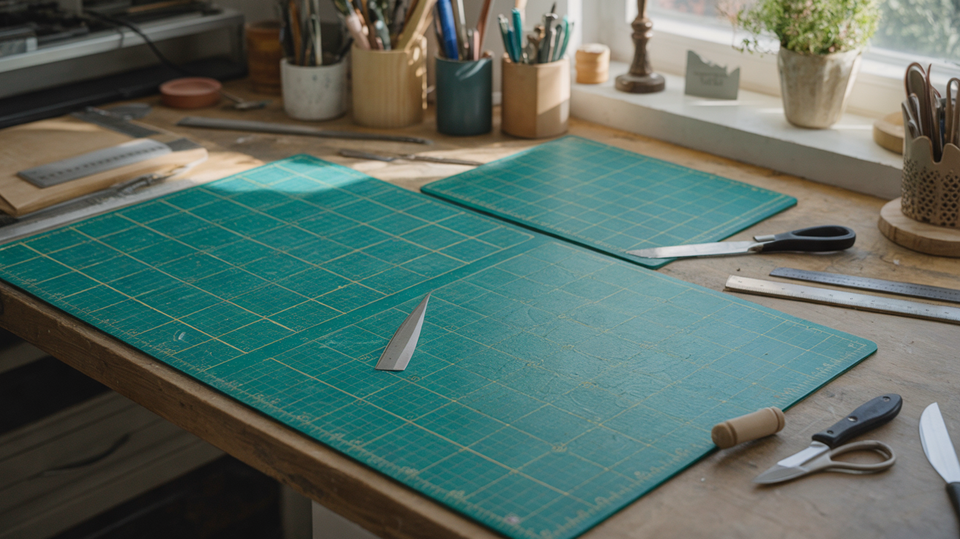
In this guide
How we picked
We focused on mats sold for craft, sewing, quilting, and hobby use that are advertised as self-healing. We compared published sizes, thickness, material, printed measurement grids, double-sided use, and buyer-reported durability and flatness.
The best picks, ranked
Idemeet Density-upgraded 24" x 36" Large Self Healing Sewing Mat, Rotary Cutting Mat 5-Pl…

- Density-upgraded for improved self-healing
- Double-sided with inch, metric, and angle marks
- Works with rotary cutters and straight blades
Self Healing Cutting Mat Extra Large 47 x 94 in, Large Table Protector Mat with Double Si…

- Approx. 94 x 47 inch work surface
- Black front and white back for contrast
- Imperial and metric gridlines on both sides
Self Healing Cutting Mat, Extra Large 47'x94', Black and White | Non-Slip Worktable Mat,…

- 94 x 47 inches with 46 x 92 inch grid
- Double sided with inches, metric, and angles
- Non-slip surface helps keep mat stable
anezus Self Healing Sewing Mat, 12inch x 18inch Rotary Cutting Mat Double Sided 5-Ply Cra…

- 12 x 18 inch (A3) cutting mat
- 5-layer PVC with self-healing surface
- Double sided with inch, metric, and angle marks
Fiskars 24" x 36" Self Healing Cutting Mat, Extra Large Double-Sided Grid | Quilting, Sew…

- 24 x 36 inch extra large cutting surface
- Double-sided self-healing design
- 30, 45, and 60-degree bias lines
Headley Tools Thickened 24 x 36 Inch Self Healing Sewing Cutting Mat, A1 Rotary Cutting S…

- 24 x 36 inches (A1), 3 mm thick
- Double sided with inch and metric markings
- Stays flat and resists warp or crack
Tujurich Self Healing Cutting Mat, 35" x 47", Double-Sided Rotary Cutting Mat for Sewing,…

- 35 x 47 inch double-sided cutting mat
- Flat, steady surface for clean cuts
- For fabric, paper, and cardstock
The cutting self healing table mat you choose can be the difference between a clean rotary cut and a project ruined by fabric drift, deep grooves, or a warped work surface. On large tables, the wrong mat also creates a second problem most buyers don’t anticipate: blade skip. Once a mat develops channels from repeated cuts, your rotary blade starts tracking those grooves instead of your ruler line.
That’s why interest in the 7 Best Self-Healing Table Cutting Mats in 2026 keeps climbing among quilters, sewists, crafters, leatherworkers, and vinyl users. People aren’t just looking for a mat that “works.” They want a mat that stays flat, protects the table underneath, keeps grid lines readable, and survives thousands of repeated passes with a rotary cutter or utility blade.
Below, you’ll get the practical buying advice that actually matters after the ranking list: which mat size works for which table, what thickness changes in real-world use, which use cases justify an oversized mat, and what review patterns separate long-lasting mats from the ones that curl, split, or lose their self-healing surface too early.
Quick takeaway: For most home users, the best value in the 7 Best Self-Healing Table Cutting Mats in 2026 category is usually a 24” x 36” or 35” x 47” double-sided, 5-ply mat. That size covers common cutting tasks without the storage headaches of oversized workshop mats.
Which cutting self healing table mat size actually works for your table?
Size is the first filter because a mat that’s too small forces constant repositioning, while one that’s too big can overhang, bow in the middle, or become annoying to store. The most searched phrase in this category is table size self healing cutting mat, and that makes sense: dimensions affect usability more than almost any other spec.
Here’s the practical breakdown:
- 12” x 18”
- Best for: small desks, card making, paper crafts, travel kits
- Real limit: too cramped for full quilting rulers or large fabric panels
- Good choice if you cut in short sessions and store everything after use
- 24” x 36”
- Best for: most sewing tables and hobby workstations
- Strong fit for garment cutting, trimming interfacing, and medium quilting blocks
- This is the safest “buy once, use often” size for most people
- 35” x 47”
- Best for: dedicated craft tables and cutting stations
- Gives you more ruler room and fewer fabric shifts on wider pieces
- Often the sweet spot for frequent quilters
- 47” x 94”
- Best for: full worktables, studio layouts, large pattern cutting, production use
- Huge benefit: you can leave the mat in place as a surface protector
- Tradeoff: much harder to rotate, move, or flatten if delivered rolled
If your table is around dining-table size, a 24” x 36” or 35” x 47” mat tends to be the most practical. If you’re covering a permanent craft bench, an extra-large mat like the 47” x 94” options makes more sense because you’re treating it as both a cutting surface and a tabletop shield.
What makes the 7 Best Self-Healing Table Cutting Mats in 2026 worth buying instead of a basic craft mat?
Not all self-healing mats are built for table use. A desktop craft mat and a true table cutting mat serve different jobs, even if both use similar PVC layers.
The top options in the 7 Best Self-Healing Table Cutting Mats in 2026 list stand out because they solve one or more of these real problems:
- Repeated rotary cutting in the same lane
- Better mats close surface cuts faster and stay smoother longer.
- Large-piece alignment
- Bigger grid fields reduce repositioning errors on fabric, vinyl, or paper.
- Table protection
- On wood, laminate, and folding tables, thicker mats absorb pressure better.
- Slip resistance
- Heavier mats move less when using long rulers or applying firm downward pressure.
For example, the Idemeet Density-upgraded 24” x 36” and Fiskars 24” x 36” style of mat are ideal for people who need a stable everyday sewing surface. Meanwhile, the extra-large 47” x 94” options and the Tujurich 35” x 47” style are better for users who cut wide runs repeatedly and hate repositioning fabric every few minutes.
Is a larger cutting self healing table mat worth it for sewing and quilting?
Usually, yes—if you cut fabric weekly.
A larger cutting self healing table mat reduces the number of times you need to fold, shift, or square your material. That matters because every reposition increases the chance of drift, especially with slippery quilting cotton, vinyl, felt, and thin leather.
Here’s where bigger mats pay off fastest:
- Quilting
- Long rulers stay fully supported
- Fewer interruptions when squaring blocks or trimming strips
- Garment sewing
- Pattern pieces lie flatter
- Less bunching at the mat edge
- Cricut and vinyl prep
- Cleaner weeding and straighter transfer cuts
- Leather and utility trimming
- More stable pressure over thicker material
If you only cut small templates, labels, or scrapbooking sheets, a full-table mat is overkill. But if you’ve ever cut a 30-inch fabric run on a small mat and watched the offcut snag the table edge, you already know why the larger category in the 7 Best Self-Healing Table Cutting Mats in 2026 exists.
What thickness and layer count matter most in a table size self healing cutting mat?
Thickness changes how a mat feels under the blade, how well it protects the table, and how quickly grooves become permanent. Most serious buyers should prioritize 5-ply construction over ultra-thin mats, especially for rotary cutting.
Here’s what actually matters:
- 5-ply construction
- This is the reliability benchmark for sewing and craft use.
- It usually gives you better cut recovery and less warping than thinner single-layer options.
- Dense core
- A denser core helps resist deep blade tracks.
- You’ll notice the difference fastest when using pressure-heavy cuts with utility knives.
- Double-sided use
- A reversible surface extends lifespan.
- It also spreads wear if you tend to cut along the same grid zones.
- Printed grid durability
- Faded lines make precise measuring harder after months of use.
- Better mats keep high-contrast markings visible longer.
- Edge stability
- Thin edges curl first, especially in warm rooms or near windows.
- A table mat that won’t lie flat becomes frustrating fast.
The Headley Tools Thickened 24 x 36 style is a good example of why “thickened” matters in listings. It’s not just a buzzword; a denser board often feels noticeably steadier under both ruler pressure and repetitive blade use.
Which mats work best by use case: quilting, sewing, paper crafts, or full-table protection?
This is where the ranked products separate themselves. The best pick for quilting isn’t always the best pick for protecting a whole worktable.
Best for quilting blocks and strip cutting
Choose a 24” x 36” or 35” x 47” mat with crisp measurement grids and enough heft to stay planted. The Idemeet Density-upgraded 24” x 36”, Fiskars 24” x 36”, and Tujurich 35” x 47” all fit this use case better than small craft mats.
Best for beginners with limited desk space
A compact option like the anezus 12” x 18” works well if you’re cutting paper patterns, patchwork pieces, or vinyl sheets on a smaller table. It’s easier to store, and beginners are less likely to damage it by bending it during setup.
Best for turning an entire table into a cutting station
The extra-large 47” x 94” style mats and large table protector formats are the best answer if you want one permanent work surface. They’re especially useful on dining tables, folding craft tables, and workshop benches where surface protection matters as much as the cut quality.
Best for mixed-use households
If the same table handles sewing one day and homework or office work the next, a removable 24” x 36” mat is usually the smartest compromise. It’s large enough for real cutting but still manageable enough to stash behind a cabinet or under a bed.
What real buyers complain about most in self-healing cutting mats
Review patterns in this category are surprisingly consistent. Most low-satisfaction complaints revolve around setup, storage, or misuse rather than the idea of a self-healing mat itself.
Watch for these specific red flags:
- Curling after delivery
- More common in oversized mats shipped rolled
- Usually improves with flat storage, room-temperature conditioning, and reverse weighting
- Visible grooves after heavy utility-knife use
- Happens faster when buyers use too much downward force
- Rotary cutters generally leave cleaner, shallower tracks
- Grid lines wearing off
- More likely with aggressive cleaners or solvent exposure
- Printed grids last longer if wiped with mild soap and water only
- Warping from heat
- A mat near a sunny window or radiator can distort
- PVC-based surfaces dislike prolonged heat far more than most new users expect
- Slipping on slick tabletops
- Large smooth tables can make lighter mats drift
- A non-slip underlayer or grippy table finish helps
💡 Did you know: Self-healing doesn’t mean “damage-proof.” It means the top layers close minor cut marks after blade passage. Deep scoring from repeated knife cuts in the exact same channel can still become permanent over time.
If you’ve seen similar material issues in other protective work surfaces, Theinternettoday covers how dense rubberized mats behave under repeated pressure in a different tabletop category.
How to get better results from the 7 Best Self-Healing Table Cutting Mats in 2026
A great mat can still perform badly if your setup is off. Most “this mat scarred too quickly” complaints come from technique issues, dull blades, or bad storage.
Use these fixes first:
- Change rotary blades sooner than you think
- A dull blade forces more pressure and increases groove depth.
- If cuts start dragging threads instead of slicing cleanly, swap the blade.
- Rotate the mat weekly
- This spreads wear across the surface.
- It’s one of the easiest ways to extend life by months, sometimes longer.
- Avoid storing it upright in a hot room
- Tall storage can encourage bowing.
- Flat storage under a bed or on a shelf is safer.
- Clean with a damp cloth, not harsh spray cleaners
- Solvents can affect printed lines and surface finish.
- Mild soap is enough for lint, chalk, and dust buildup.
- Use the right blade for the material
- Fabric, cardstock, and light vinyl cut differently than leather or foam sheet.
- Wrong blade pairing creates drag and rough channels.
For readers who like comparing material behavior across gear categories, https://techfi.writeas.com is a useful contrast in how surface density affects grip and recovery under repeated pressure.
What’s the best budget range for a cutting self healing table mat in 2026?
The value sweet spot is usually the mid-range tier, especially if you want a mat large enough for serious sewing but not so large that storage becomes a problem. Tiny mats are cheaper, but many users outgrow them quickly. Oversized mats offer huge convenience, but they cost more to ship and are harder to handle.
A simple budget breakdown:
- Entry-level range
- Best for paper crafting, occasional sewing, compact desks
- Usually smaller formats like 12” x 18”
- Mid-range sweet spot
- Best for most hobby sewists and quilters
- Common sizes: 24” x 36” and similar
- Best balance of coverage, durability, and portability
- Premium range
- Best for dedicated studios, pattern cutting, and full-table coverage
- Includes 35” x 47” and 47” x 94” formats
The best buying strategy is to match the mat to your workspace, not just your project list. A too-small mat wastes time; a too-large mat can become dead weight you avoid pulling out.
If you enjoy side-by-side buying frameworks, this guide is unrelated to crafts but does a solid job showing how use-case-based shopping beats spec-sheet shopping.
What to look for before you buy a table size self healing cutting mat
If you only remember one section, make it this one. The best table size self healing cutting mat is the one that matches your table, your cutter, and your actual cutting frequency.
1. Match the mat to your table footprint
Leave a small margin rather than buying edge-to-edge unless the mat is meant to stay permanently. For temporary setups, a little clearance makes the mat easier to lift, rotate, and store.
2. Prioritize 5-ply construction for regular rotary cutting
For weekly sewing or quilting, 5-ply is the practical minimum. That layer structure tends to resist trenching better than flimsier alternatives.
3. Choose larger than your ruler, not just larger than your project
A long ruler overhanging the mat creates unstable cuts. Your mat should support both the material and the ruler body, especially for strip cutting.
4. Check whether you need a permanent surface protector
If the mat will live on the table full time, oversized options make sense. If you set up and pack down often, a medium-large mat is less frustrating.
5. Think about storage before ordering extra-large sizes
A 47” x 94” mat is excellent on the table and awkward everywhere else. If you can’t store it flat, step down a size.
For more product-comparison reading styles, you can see for yourself how other categories break down “best for most people” versus “best for dedicated users.”
Where the listed mats fit best in real homes and workspaces
Because the ranking list is already above, the useful question now is placement.
- Idemeet Density-upgraded 24” x 36”
- Best for everyday sewing tables
- Great if you want a stable medium-large mat without studio-scale bulk
- Rotary Cutting Mat 5-Pl…
- Best for general-purpose craft cutting
- A good match if you care most about standard 5-ply reliability
- Self Healing Cutting Mat Extra Large 47 x 94 in
- Best for full table coverage
- Ideal for pattern cutting and leaving a protective surface in place
- Large Table Protector Mat with Double Si…
- Best for mixed cutting and tabletop protection
- Useful on dining or multi-use family tables
- Self Healing Cutting Mat, Extra Large 47’x94’, Black and White | Non-Slip Worktable Mat,…
- Best for users who want a visual contrast option plus broad coverage
- Strong choice for dedicated worktables
- anezus Self Healing Sewing Mat, 12inch x 18inch
- Best for small-space beginners
- Easy to store and easy to learn on
- Fiskars 24” x 36” Self Healing Cutting Mat
- Best for established sewists who want a familiar core size
- Excellent for quilting rulers and repeated medium-size cuts
- Headley Tools Thickened 24 x 36 Inch
- Best for users who want a denser feel under the blade
- A smart option if your current mat feels too soft
- Tujurich Self Healing Cutting Mat, 35” x 47”
- Best for stepping up from medium to near-full-table coverage
- Good for wider layouts without going to giant workshop size
You can see similar “best fit by scenario” formatting in niche roundups like full article, even though the category is completely different.
The single most important buying decision for the 7 Best Self-Healing Table Cutting Mats in 2026
Pick the size first.
More specifically, choose the largest mat you can store flat and use comfortably every week. For most readers comparing the 7 Best Self-Healing Table Cutting Mats in 2026, that means a 24” x 36” mat if you want versatility, or a 35” x 47” mat if you have a dedicated cutting table and regularly work with wider fabric or pattern pieces.
For unrelated examples of how niche product pages handle source trails, you can see original or compare blog-style references like https://galushko87.blogspot.com.
Frequently Asked Questions
what is a self healing cutting mat and how does it work?
A self-healing cutting mat uses layered material that closes minor surface cuts after a blade passes through. It won’t erase deep gouges forever, but it does reduce visible scoring and helps the cutting surface last longer than a basic hard board.
is a cutting self healing table mat worth it for occasional sewing?
Yes, especially if you use a rotary cutter or care about protecting your tabletop. Even occasional sewists usually get cleaner cuts, better ruler stability, and fewer damaged surfaces with a proper mat than with cardboard, hardboard, or bare tables.
how to flatten a large self healing table mat after shipping?
Lay it flat in a room-temperature space and place evenly distributed weight on the curled sections for 24 to 72 hours. Avoid heat guns or direct sun, because excess heat can warp PVC layers and distort grid lines.
what size self healing cutting mat is best for a sewing table?
For most sewing tables, 24” x 36” is the best all-around size because it balances usable cutting area with easy storage. If you quilt often or cut larger garment pieces, 35” x 47” gives you more working room with fewer fabric shifts.
can you use a utility knife on the 7 Best Self-Healing Table Cutting Mats in 2026?
Yes, but repeated heavy utility-knife cuts will wear any mat faster than rotary cutting. If you use knives often, choose a thicker 5-ply mat, rotate it regularly, and avoid scoring the same channel over and over.