In this guide
How we picked
We shortlisted current vehicle battery jump starter models sold by major retailers and compared manufacturer-listed specs a reader can verify, including peak amps, battery capacity, cable gauge or length, USB outputs, and safety protections. We also checked portability details such as weight, case or clamp inclusion, and stated support for engine size or battery type.
The best picks, ranked
NOCO Boost GB40 12V 1000A UltraSafe Portable Lithium Jump Starter | Spark-Proof & Reverse…

- 1000A peak; up to 20 starts per charge
- Spark-proof and reverse polarity protection
- 100-lumen LED with 7 light modes
OXILAM Jump Starter 6000A for All Gas/12L Diesel, Car Battery Jumper Starter Portable, 12…

- 6000A peak; up to 60 jumpstarts
- Starts all gas and 12L diesel engines
- 10 safety protections with intelligent clamps
JOLTEKON Car Battery Jump Starter with Air Compressor 4500A 150PSI, Car Jumper Starter Po…

- 8-in-1 with 4500A jump starter
- 150PSI air pump with auto shut-off
- 500-lumen lights with 4 modes
S ZEVZO ET03 Car Jump Starter 4000A Jump Starter Battery Pack for Up to 8.0L Gas and 7.0L…

- 4000A peak for 12V vehicles
- Force start for completely dead batteries
- 500-lumen LED with 3 light modes
NOCO Boost GB70 2000A UltraSafe Jump Starter, 12V Lithium Battery Booster | Spark-Proof &…

- 2000A peak; up to 40 starts per charge
- Starts up to 8.0L gas and 6.0L diesel
- 400-lumen LED with 7 light modes
Clore Automotive Jump-N-Carry JNC660 1700 Peak Amp 12 Volt Jump Starter , Blue

7000A Jump Starter, 12V Battery Jumper Starter Portable Car Booster, Jump Box Pack for Al…

- 7000A peak for 12V vehicles
- Works on all gas and up to 12.0L diesel
- 14 integrated safety protections
A vehicle battery jump starter solves one very specific problem fast: your car won’t crank, you’re stuck with a weak 12V battery, and you need enough peak current in the next 60 seconds to get moving again. Modern lithium jump packs now routinely deliver 1,000 to 6,000 peak amps, and the difference between a compact glove-box unit and a heavy-duty jump box can mean the difference between restarting a small sedan once or reviving a large diesel multiple times.
That’s why readers searching 7 Best Vehicle Battery Jump Starters in 2026 usually aren’t just browsing. You want to know which type actually fits your engine size, how much power is enough, whether extras like an air compressor matter, and which mistakes can quietly ruin a jump attempt.
Below, I’ll break down the 7 Best Vehicle Battery Jump Starters in 2026 by real-world use case, budget range, battery type, and common buying traps. You’ll also get practical guidance on safety, charging, review patterns, and what features are worth paying for.
Quick trust note: The ranked product list and testing summary already appear above this section on the page, so this guide focuses on how to choose the right model for your situation, not repeating the same scoring data.
Which type of vehicle battery jump starter is best for your car in 2026?
For most drivers, the best fit among the 7 Best Vehicle Battery Jump Starters in 2026 is a 1,000A to 2,000A lithium unit. That range is usually enough for compact cars, midsize sedans, small crossovers, and many light trucks, while staying small enough to keep under a seat.
If you drive a larger SUV, a high-compression V8, or a diesel, the safer bet is 2,000A to 4,500A+. Real-world cold starts demand more than the packaging implies, especially below freezing, where battery output can drop sharply and cable resistance matters more.
Here’s the fastest way to match the jump starter to your vehicle:
- Small gas engines: compact 1,000A-class units are often enough
- Midsize gas vehicles: 1,500A to 2,000A gives better restart margin
- Large gas SUVs and pickups: 2,000A to 4,000A is the sweet spot
- Diesel engines: choose the largest supported rating you can reasonably store
- Fleet, shop, or repeated use: heavier lead-acid style units can still make sense
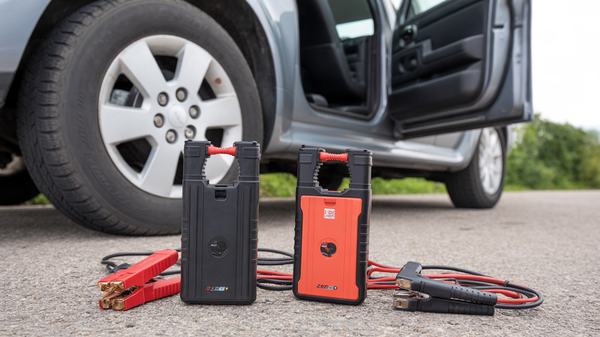
A good example is the split between a pocketable lithium pack and a workshop-style box. The first is easier to store and charge monthly. The second is bulkier, but it’s often better if you jump multiple vehicles in a week.
7 Best Vehicle Battery Jump Starters in 2026: which pick matches your budget?
The 7 Best Vehicle Battery Jump Starters in 2026 don’t all serve the same buyer. In practice, most shoppers fall into three price bands, and each one has a clear tradeoff between portability, power, and extras.
Under the entry-level range: best for emergency-only use
If you drive mostly in the city and want something for rare battery failures, entry-level jump starters can work well. These units are usually compact and easy to charge by USB-C, but they tend to offer fewer full-power starts per charge.
What matters most here:
- At least 1,000 peak amps
- Reverse-polarity protection
- A battery status indicator
- Reliable clamp build quality
- 4.2-star review average or better
This is also where searches like battery tender vehicle jump starter 600 amp still show up, but in 2026, 600-amp class packs are generally better for motorcycles, powersports, or very small gas engines, not as your only solution for a modern family vehicle.
Mid-range sweet spot: best value for most drivers
This is the strongest category for everyday use. A solid mid-range model typically gives you better cable thickness, stronger clamps, faster recharge times, and enough reserve for multiple starts before needing a recharge.
If you’ve looked at battery tender vehicle jump starter reviews, you’ve probably noticed a pattern: buyers are happiest in this middle band because the units are still compact, but they don’t feel underpowered the first cold morning your battery fails.
This is also where you’ll see more useful combo features, including a vehicle battery charger and jump starter setup or integrated tire inflation on some models.
Premium picks: best for trucks, diesels, and winter reliability
Premium units earn their higher cost when you need consistent cold-weather performance or support for larger engines. A battery tender vehicle jump starter 1000 peak amps can be enough for many vehicles, but once you move into heavy-duty applications, a higher ceiling reduces failed attempts.
If you regularly camp, tow, or drive in remote areas, premium models often justify themselves with:
- Higher capacity lithium cells
- Better low-temperature performance
- More durable clamps and insulation
- Faster recharge cycles
- More accessory outputs for phones, lights, and inflators
For side-by-side deal comparisons, you can review portable jump starters deals in detail.
What should you look for before buying one of the 7 Best Vehicle Battery Jump Starters in 2026?
The fastest way to buy the right unit is to ignore marketing phrases and check six concrete specs.
1. Peak amps are useful, but engine compatibility matters more
A jump starter marketed with huge peak numbers can still disappoint if the supported engine sizes are vague. Check whether the unit clearly states gas and diesel limits, because that tells you more than a bold amp number on the box.
For example, a battery tender 12v vehicle jump starter should clearly state that it’s for 12V systems, not heavy commercial electrical setups. If your vehicle runs a standard passenger-car battery, 12V compatibility is essential.
2. Clamp quality tells you more than the outer shell
Cheap clamps overheat, slip, or lose bite on corroded terminals. In actual roadside use, clamp pressure and cable flexibility matter as much as the battery pack itself.
Look for:
- Thick copper contact surfaces
- Insulated grip handles
- Flexible cables in cold weather
- A smart clamp module with visible warning lights
3. Battery type affects storage, weight, and maintenance
Lithium models dominate the 7 Best Vehicle Battery Jump Starters in 2026 because they’re lighter and easier to store. Lead-acid units still have a place for shops and repeated starts, but they’re bulkier and harder to keep charged long term.
That matters if your jump pack sits in the trunk for three months at a time. A neglected battery pack is almost as useless as a dead car battery.
4. Extra functions should solve a real problem
A battery tender vehicle jump starter and portable power bank makes sense if you travel often and want USB output for phones or GPS gear. A battery tender vehicle jump starter & portable power bank combo is most useful when it also has a clear screen, fast input charging, and enough reserve capacity to avoid draining itself after one emergency use.
Meanwhile, built-in air compressors are convenient, but they add size and heat. If your main goal is reliable starts, power delivery should come first.
5. Recharge time matters more than many buyers expect
Some units take a few hours to top off; others need much longer. If you use the pack once and toss it back in the trunk half-charged, you’ve created your next problem.
A good benchmark is a model that can be realistically recharged overnight without a proprietary wall brick. If you want another battery-related buying reference, best 48v ebike battery explained covers how battery capacity claims can differ from real-world usefulness.
6. Review count still matters
Products with a strong rating across 1,000+ reviews are usually a safer buy than products with a slightly higher score across only a few dozen reviews. In jump starters, recurring complaints about clamp failure, false charge indicators, or weak cold-weather starts are far more meaningful than flashy specs.
Which of the listed jump starters is best for specific use cases?
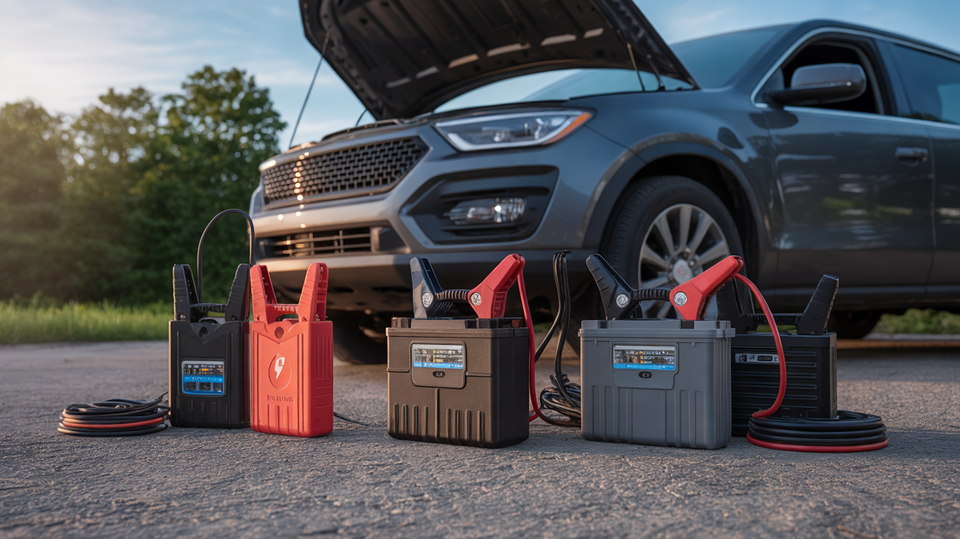
The ranked list above includes several distinct types of jump starter, and each suits a different buyer.
Best for compact storage: pocket-size lithium starters
If you want a jump pack that fits in a glove compartment or door pocket, the smaller lithium models are the easiest to live with. They’re ideal for commuters who want a backup plan without carrying a bulky shop tool.
Their tradeoff is simple: fewer starts per charge and less margin for larger engines.
Best for larger engines: high-output lithium packs
If your vehicle has a bigger gas engine or diesel, the strongest lithium units on the list are the smarter choice. This is where high-output models stand out from lower-capacity packs that look similar online but struggle in freezing weather.
A vehicle jump starter battery tender style product can work very well here if it combines smart safety electronics with enough reserve capacity for repeated crank attempts.
Best for home garages: heavy-duty jump boxes
Heavier jump boxes still shine in garages, fleets, and households with multiple vehicles. They’re less convenient to carry, but their larger reserve often makes them more forgiving if one car has a severely depleted battery.
If you already keep other car accessories nearby, resources like dashai.ghost.io can help round out your vehicle emergency setup.
What do real reviews reveal about vehicle battery jump starters in 2026?
Review patterns are surprisingly consistent. Buyers praise fast starts, compact storage, and USB charging. Complaints usually cluster around three issues: unrealistic amp claims, weak clamps, and poor charge retention after months of storage.
That means you should watch for these red flags:
- Review averages below 4.2 stars
- Repeated mentions of “fully charged but wouldn’t jump”
- Complaints about melted, hot, or loose clamps
- Reports of the battery draining in storage within a few weeks
- Unclear instructions for override mode or low-voltage detection
A battery tender by deltran vehicle jump starter or similar search phrase often brings up buyers comparing brand reputation with actual performance. The smartest move is to prioritize long-term owner feedback over launch-week hype.
💡 Did you know: A deeply discharged 12V battery can fall below the voltage threshold some smart clamps require to detect a connection. That’s why certain jump starters include a manual override or boost mode for very low-voltage batteries.
If you like comparing niche gear categories before buying, you can find out more about how deal-roundup pages structure spec comparisons. The same logic applies here: the spec sheet matters less than whether a product performs under real conditions.
How to avoid the most common buying mistakes with the 7 Best Vehicle Battery Jump Starters in 2026
The biggest mistake is buying for normal weather instead of worst-case weather. A starter that barely handles your engine on a mild day may fail completely at 20°F or below, especially if your battery is old.
The second mistake is ignoring maintenance. Even the best jump starter should be checked every 60 to 90 days, topped up as needed, and stored away from extreme heat.
The third mistake is overvaluing gimmicks. A jump starter with a floodlight, tire inflator, and three charging ports sounds appealing, but if its cables are short and the clamps flex under pressure, those extras won’t matter during an actual no-start event.
For a quick product-page audit mindset, some shoppers even use tools like SEO checker utilities to judge whether a listing gives enough real spec detail. Sparse, recycled descriptions are often a warning sign.
Are combo units with chargers or power banks worth it?
Usually, yes—if the core jump function is strong first. A vehicle battery charger and jump starter combo is especially useful for people who maintain a seasonal vehicle, weekend car, or backup truck that sits for long periods.
You’ll also see interest in battery tender vehicle jump starter and portable power bank devices because they reduce the number of gadgets you carry. That’s worth paying for only if the unit still supports your engine size with room to spare.
If you’re comparing shopping categories broadly, even odd-looking referral trails like maps.google.com.uy show how often users jump between deal pages while researching. The point is simple: compare based on battery reserve, recharge time, and clamp quality, not just feature count.
Pro tip: if your car sits more than two weeks at a time, the better long-term purchase may be both a jump starter and a maintainer. That’s why search terms like battery tender vehicle jump starter keep growing; people want one emergency tool and one battery-health tool, even though they solve different problems.
For an unrelated but interesting example of specialized buyer search intent, beginner jump rope for boxers shows how users often search by skill level first, then specs second. Jump starter shoppers do something similar with “small car,” “diesel,” or “portable power bank.”
Final buying advice for the 7 Best Vehicle Battery Jump Starters in 2026
If you’re choosing among the 7 Best Vehicle Battery Jump Starters in 2026, the single most important criterion is buying more starting headroom than your vehicle seems to need. For most drivers, that means a compact 12V lithium jump starter with at least a 1,000A-class output, smart clamps, and strong long-term reviews; for trucks and diesels, step up well beyond that baseline.
Frequently Asked Questions
how to use battery tender vehicle jump starter
First, make sure the jump starter is charged, then connect the red clamp to the positive terminal and the black clamp to the negative terminal or a recommended ground point. Turn on the unit if required, wait for the ready indicator, and crank the engine for a few seconds at a time rather than holding the starter continuously.
what is the best amp rating for a vehicle battery jump starter
For most everyday cars, 1,000 to 2,000 peak amps is the practical sweet spot. Larger SUVs, trucks, and diesel vehicles usually benefit from 2,000A or more, especially in cold weather.
is a battery tender vehicle jump starter worth buying
Yes, a jump starter is worth buying if you drive regularly, park in cold weather, or own a vehicle with an aging battery. The best value comes from models that combine reliable jump performance, clear safety protections, and enough reserve to handle more than one start per charge.
can a vehicle jump starter replace a battery charger
No, a jump starter and a charger do different jobs. A jump starter provides short bursts of high current to start the engine, while a charger restores battery capacity slowly over time and is better for maintenance.
how often should I recharge my portable car jump starter
Most portable jump starters should be checked every 2 to 3 months, even if you haven’t used them. Hot trunks and winter storage can reduce charge faster, so a quick top-up before road trips is a smart habit.