In this guide
How we picked
We selected spotting scope models currently sold by major outdoor and camera retailers and compared published specs readers can verify, including magnification range, objective lens diameter, close focus, weight, waterproofing, and included accessories. We also checked listed price, tripod compatibility, and warranty details where available.
The best picks, ranked
SVBONY SV28 Spotting Scope, Angled 25-75x70 with Tripod for Target Shooting | Spotter Sco…

- 25-75x zoom with 70mm objective
- Includes phone adapter and tripod
- Waterproof with non-slip finish
Vortex Crossfire HD Spotting Scopes (20-60x80 Angled) | HD Optics, Fully Multi-coated Len…

- 20-60x80 angled spotting scope
- Arca-Swiss compatible foot
- Waterproof, fogproof, shockproof
25-75x80 Spotting Scope with Desktop Tripod for Target Shooting DiamondEdge | Long-Range…

- 25-75x magnification, 80mm lens
- BAK4 prism and FMC optics
- Includes tabletop tripod and case
Flagship 20-60x80 Spotting Scope with Tripod for Bird Watching | With Tripod, Phone Adapt…

- 20-60x zoom with smooth focus
- 80mm FMC lens with BAK4 prism
- Includes smartphone adapter
NWDEY 25-75X60 Spotting Scope with Upgraded 60in Tripod, BAK4 Prism & FMC | for Target Sh…

- 25-75x60 spotting scope
- BAK4 prism with FMC 60mm lens
- Includes upgraded 60in tripod
Vortex Viper HD Spotting Scope (20-60x85 Angled) | HD Optics, XR Plus Lens Coatings, Heli…

- 20-60x85 angled spotting scope
- HD optics with XR coatings
- Waterproof and fogproof
Vortex Crossfire HD Spotting Scopes (12-36x50 Straight) | HD Optics, Fully Multi-coated L…

- 12-36x50 straight spotting scope
- Arca-Swiss compatible foot
- Waterproof, fogproof, shockproof
A spotting scope can turn a blurry 300-yard target into a readable group, but only if you match the optic to the job. I’ve used compact 50mm bodies on windy ranges, hauled 80mm class glass across marsh trails before sunrise, and learned the hard way that bad tripod balance can make even sharp optics feel useless.
That’s why the real question behind 7 Best Spotting Scopes in 2026 isn’t just “which model ranks highest.” It’s which scope format, magnification range, and support setup will actually work for your birding, target shooting, or long-range glassing style. Below, I’ll break down how to choose among the listed picks on this page, where compact scopes beat big objective lenses, and which trade-offs matter most once you’re out in the field.
Quick trust note: The ranked picks and scoring are already listed above on this page, so this guide focuses on the decision-making part most buyers still struggle with: use case fit, optical trade-offs, tripod setup, and review-pattern red flags.
What makes the 7 Best Spotting Scopes in 2026 actually different in real use?
On paper, several scopes look nearly identical: similar zoom ranges, similar objective sizes, similar claims about coated optics. In the field, though, a 20-60x80 angled scope behaves very differently from a 12-36x50 straight body, especially after 30 minutes of scanning.
For example, the compact straight model in the ranked list is much easier to pack and faster to point at a steel plate or hillside marker. Meanwhile, the larger 80mm and 85mm class angled scopes pull ahead in low light, edge sharpness at higher magnification, and all-day comfort when mounted as a spotting scope on tripod.
Here’s the simplest way to split the seven picks:
- Compact travel/range scopes
- Better if you want less bulk
- Faster target acquisition
- Easier to fit in a daypack
- Usually weaker above mid-range zoom
- Mid-size general-purpose scopes
- Best balance for most buyers
- Good for birding, target shooting, and wildlife observation
- Often the sweet spot if you’ll use one optic for multiple hobbies
- Large objective premium-style scopes
- Brighter at dawn and dusk
- More forgiving at 45x to 60x
- Heavier, and much more dependent on a stable spotting scope tripod
If you skim just one takeaway from 7 Best Spotting Scopes in 2026, make it this: objective size helps, but a shaky support system ruins more viewing sessions than mediocre glass does.
Which spotting scope size is best for birding, target shooting, and long-range use?
Most buyers choose the wrong size first, then blame the optic later. A scope that feels underwhelming on the 600-yard line may be excellent for a wetland trail, while a bright 80mm model can become dead weight if you hike more than a mile.
For target shooting at 100 to 300 yards
A mid-size or large objective scope usually makes the most sense. Bullet holes on paper become easier to read when mirage is mild, and the extra light transmission matters more as you push magnification upward.
The listed 70mm to 80mm options are especially practical here because they give you a better balance of reach and portability than ultra-compact bodies. If you also want easy bench use, pair them with a tripod for spotting scope that reaches seated eye level without extending the thinnest leg sections.
For birding and wildlife observation
Birders often overestimate how much top-end zoom they’ll really use. In real conditions, 20x to 40x is often sharper and more useful than max zoom, especially during heat shimmer or low-light movement.
That’s where a vortex optics spotting scope style design with good coatings and a usable mid-range zoom can feel better than a spec-sheet monster. If you scan for long periods, an angled eyepiece is usually less fatiguing than a straight one.
For hiking and travel
Weight matters more than people admit. A compact straight model can save well over a pound compared with a full-size 80mm or 85mm body, and that difference is noticeable by mile two.
If your priority is fast setup at overlooks or short-range observation, the smaller listed straight scope is often the smartest buy. A lightweight tripod for a spotting scope becomes part of that equation, because portability disappears fast if the support kit is too heavy.
Straight vs angled spotting scope: which body style should you buy?
This is one of the biggest real-world decisions in 7 Best Spotting Scopes in 2026, because body style affects comfort more than many first-time buyers expect.
Straight spotting scope vs angled for target shooters
A straight body is faster to align with what you’re already looking at. If you’re checking a lane, a steel target, or a known point on the range, straight designs feel intuitive and can be less frustrating for beginners.
That’s why the compact straight pick on this page makes sense for users who value quick sightline matching. For bench use, a tripod spotting scope setup with a straight body can also be simpler to share between shooters.
Angled vs straight spotting scope for birding
Angled bodies usually win for long sessions. You can keep the tripod lower, reduce neck strain, and share the scope more easily with people of different heights just by adjusting the head angle.
The listed 20-60x80 and 20-60x85 angled models are strong examples of where this matters. If you’ve ever spent an hour scanning shorebirds, you already know that ergonomics matter almost as much as brightness.
The direct answer
- Choose straight if you prioritize fast target acquisition, compact carry, and easier learning.
- Choose angled if you prioritize comfort, shared viewing, and extended scanning.
If you’ve searched spotting scope angled or straight, that’s the practical answer most experienced users land on after enough field time.
How much magnification do you really need from the 7 Best Spotting Scopes in 2026?
More zoom sounds better until the image softens, darkens, or dances in mirage. In practice, usable magnification matters more than advertised magnification.
A 25-75x zoom looks impressive on a product card, but many users spend most of their time around 25x to 45x. Once you push past that, atmospheric conditions often become the limiting factor, not the optic itself.
Watch for these patterns:
- 20-60x is the most versatile range for mixed use
- 25-75x can help on paper targets in good conditions, but the upper end is less consistently useful
- 12-36x compact scopes trade top-end reach for portability and speed
This is also why the vortex spotting scope razor hd and similar premium-style glass categories get so much attention in search. Buyers aren’t chasing numbers alone; they want a scope that stays sharp deeper into the zoom range. Terms like vortex razor hd spotting scope, razor hd spotting scope, and vortex razor spotting scope show up often because users associate them with better high-magnification performance.
That said, don’t pay for top-end zoom if your main use is 100-yard sight-in work or casual birding. A stable image at 30x beats a mushy image at 60x every time.
What should you look for besides glass quality?
Specs matter, but the buying decision usually comes down to four things you notice within the first week.
1. Tripod compatibility and balance
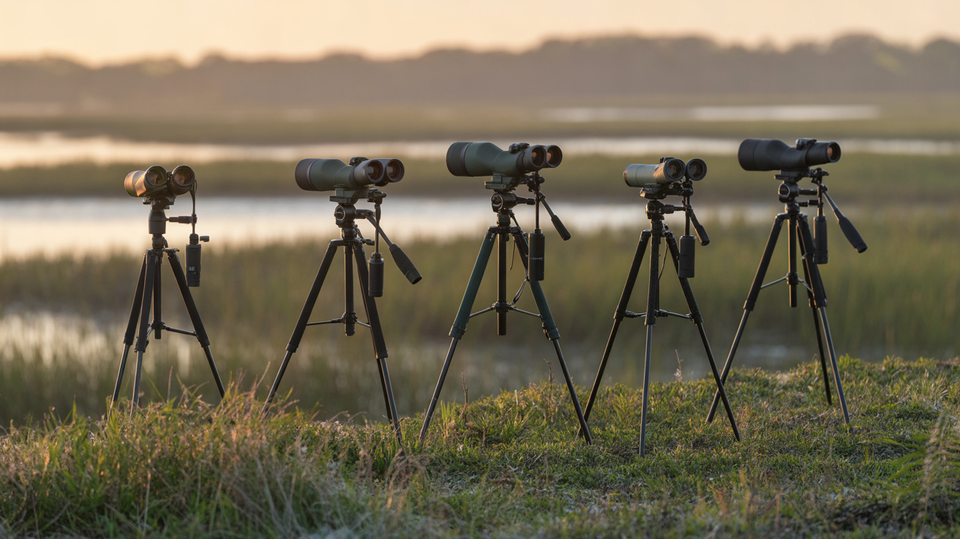
A great optic on a weak tripod is still a bad experience. For most mid-size and large models, you want a spotting scope tripod with a fluid or smooth pan head, solid center column lock, and enough load margin that the scope doesn’t sag after adjustment.
Searches like tripods for spotting scope and tripod for spotting scope are common for a reason. Many “included” tripods work in calm indoor conditions but wobble badly outdoors.
2. Eye relief and viewing comfort
If you wear glasses, short eye relief gets annoying fast. You’ll notice it before you notice tiny sharpness differences, especially during extended glassing sessions.
3. Focus speed
Dual-focus or fine-focus systems are excellent, but even a single-focus design can work well if it snaps into focus quickly. At long range, a sloppy focus ring wastes time and makes mirage look worse than it is.
4. Weather sealing
A scope used near coastlines, marshes, or winter ranges needs dependable sealing. Fogging and internal haze don’t show up in marketing photos, but they show up in long-term owner complaints.
Budget breakdown: where each type of spotting scope makes the most sense
Because the ranked list is already above, think of this section as a budget strategy guide rather than a repeat of the picks.
Entry range: best for beginners and occasional shooters
This is where simple 60mm to 70mm class scopes often make sense. You’ll usually get enough clarity for 100-yard to 200-yard target work and casual wildlife viewing, but you may notice edge softness and dimmer performance near maximum zoom.
If you’re comparing starter optics across categories, the trade-offs are similar to what you’ll notice in best airsoft scopes: entry-level models can absolutely work, but stability and realistic expectations matter more than hype.
Mid-range sweet spot: best value for most buyers
For most readers shopping 7 Best Spotting Scopes in 2026, this is the smartest tier. You get a meaningful step up in coatings, focus precision, and low-light usability without carrying the full cost and weight of elite glass.
This is also where terms like vortex spotting scope, spotting scope vortex, and vortex spotting scope razor hd tend to appear in search behavior. Buyers in this range are usually chasing the best mix of optical performance and real-world durability.
Premium range: best for serious birders and demanding range use
This is where large-objective HD optics shine, especially at dawn, dusk, or in overcast weather. If you regularly glass fine feather detail or need better image integrity above 45x, premium glass can be worth it.
Search demand around swarovski spotting scope and spotting scope swarovski reflects that top-tier reputation, even if many buyers ultimately choose a less expensive option. The gap you’re paying for is usually visible in contrast, color fidelity, and high-zoom composure, not just raw brightness.
What review patterns signal a good spotting scope versus a frustrating one?
The product page tells you what a scope claims to do. Reviews tell you what it does after six months.
Here are the review patterns I pay attention to most:
- Repeated tripod complaints
- If buyers love the glass but replace the included support immediately, budget for a better tripod for spotting scope
- This is extremely common in value-priced bundles
- “Sharp at low power, mushy at high power” comments
- Normal to a degree
- A warning sign if it appears in dozens of reviews for the same model
- Focus drift or stiff focus rings
- Especially annoying in cold weather
- Often a bigger quality-of-life issue than slight edge softness
- Eyepiece comfort complaints
- Important if multiple users share the optic
- Common on scopes with less forgiving eye positioning
- Weight surprise
- Buyers underestimate the total carry weight once the spotting scope on tripod is included
- A heavy 80mm class kit can push well beyond what casual hikers want to carry
💡 Did you know? Heat shimmer can make a premium scope look worse than a budget scope in midday conditions. If your image goes wavy at 50x on a hot range, the atmosphere is often the real limit—not the optic.
Is a premium spotting scope worth it, or should you buy a mid-range model?
For most users, the answer is simple: buy premium only if your use case exposes the difference often enough to justify it.
A mid-range scope is usually the better value if you: - Shoot at common public-range distances - Bird in daylight more than dawn or dusk - Need decent portability - Don’t spend long stretches above 40x
A premium optic is usually worth it if you: - Glass wildlife in low light several times a month - Need better edge-to-edge performance at higher magnification - Use the scope professionally or very frequently - Already plan to pair it with a quality spotting scope tripod
If you want broader optics context beyond spotting scopes, there’s more on best telescope for adults, which helps clarify how magnification expectations differ across optical categories.
Meanwhile, niche optics comparisons sometimes surface in odd places, from an official site post to a guide on Blogspot. The takeaway is the same: once magnification climbs, support quality and realistic use conditions matter more than the headline spec.
What setup mistakes ruin spotting scope performance fastest?
Even among the 7 Best Spotting Scopes in 2026, poor setup can wreck the view.
Here are the most common mistakes I see:
- Extending the thinnest tripod legs first
That’s the fastest way to introduce wobble. Keep the lower leg sections collapsed whenever possible. - Starting at maximum zoom
Begin at the lowest magnification, find your subject, then zoom in. This matters even more on compact straight bodies. - Using a scope that’s too tall or too short for your posture
Bad ergonomics create shake because you keep touching the optic to readjust. - Ignoring atmospheric conditions
Mirage, heat shimmer, and backlit haze can reduce usable detail more than lens quality can fix. - Buying for specs instead of use case
A lightweight compact model can outperform a bigger scope for your needs if you actually carry and use it more often.
For additional browsing trails and external references, some readers like to this article, view page, or even odd search pathways like images.google.az. Just remember that field performance matters more than roundup hype.
Final buying advice for the 7 Best Spotting Scopes in 2026
If you’re choosing among the listed models, the single most important criterion is matching scope size and body style to how you’ll actually use it 80% of the time. A compact straight scope is often the smartest choice for fast range sessions and travel, while a larger angled model is usually the better investment for birding, low-light viewing, and longer glassing sessions.
Frequently Asked Questions
binocular vs spotting scope
Binoculars are better for wide-field scanning, movement, and all-day comfort, while a spotting scope gives you more magnification and detail at long distance. If you need to read targets, study distant wildlife, or judge fine feather detail, a spotting scope usually wins.
binoculars vs spotting scope for birding
For active birding on trails, binoculars are usually faster and more practical because they’re lighter and easier to track moving birds with. A spotting scope becomes the better tool for shorebirds, raptors, and long-distance observation from a fixed position.
spotting scope vs binoculars for target shooting
A spotting scope is usually the better choice for target shooting because it offers higher magnification and makes it easier to see bullet holes or impact marks at distance. Binoculars work for spotting steel or general observation, but they rarely match the detail of a properly mounted scope.
straight vs angled spotting scope
A straight spotting scope is quicker to aim and often easier for beginners, especially at the range. An angled spotting scope is more comfortable for long sessions and works better when multiple people of different heights share one tripod.
spotting scope straight vs angled which is better
Neither is universally better; the right choice depends on your use case. For target shooting and fast alignment, straight usually feels easier, while angled is typically better for birding, low tripod setups, and extended scanning.